
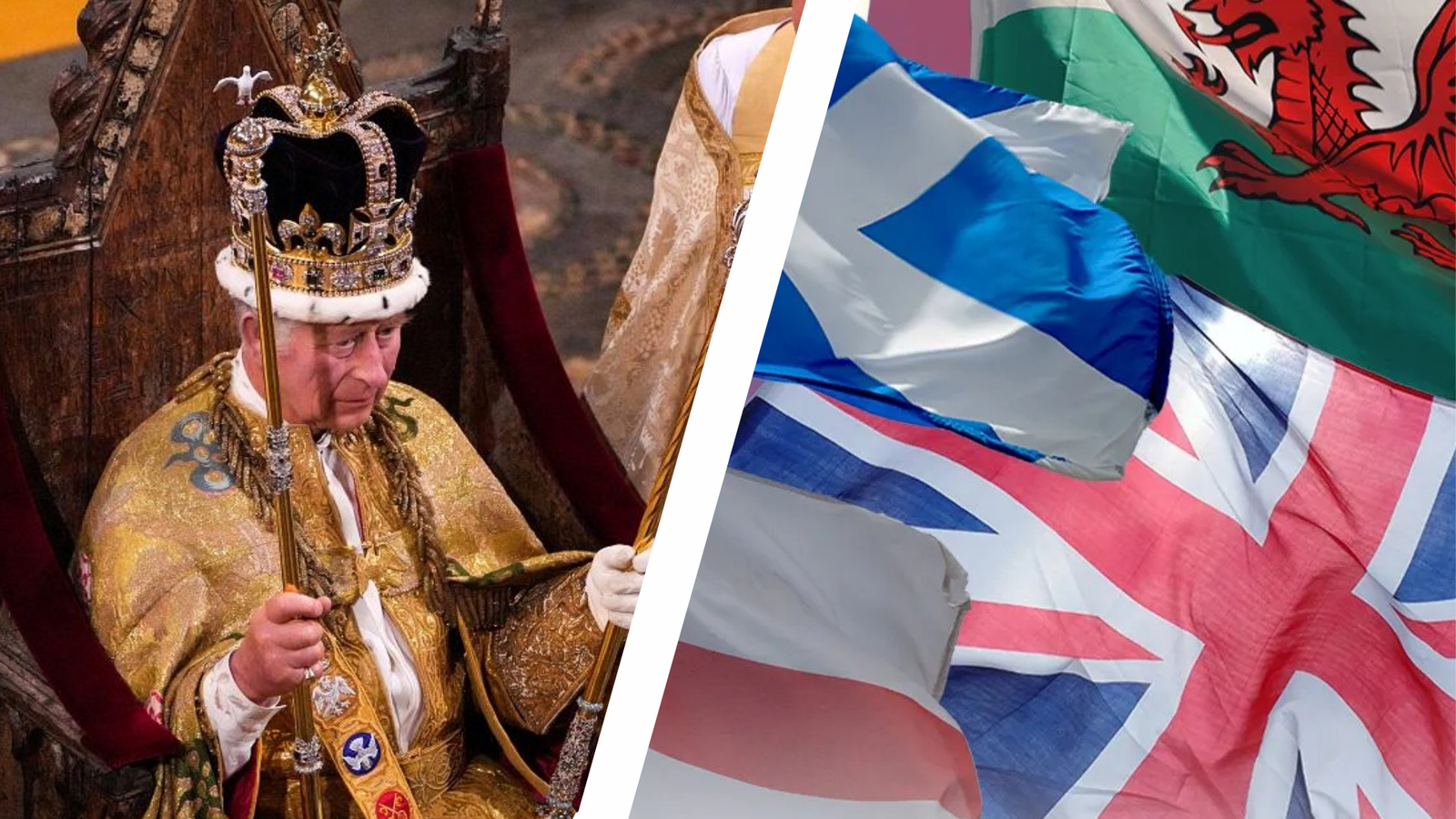
On 14 September 2026, the nationalist leaders of Scotland, Wales, and Northern Ireland convened in Cardiff to sign a historic Memorandum of Understanding. John Swinney of the Scottish National Party, Rhun ap Iorwerth of Plaid Cymru, and Michelle O’Neill of Sinn Féin, alongside Mary Lou McDonald, formally declared that Westminster’s time is coming to an end. This moment is unprecedented. For the first time in history, the First Minister offices in all three devolved administrations are held by leaders committed to exiting the United Kingdom. Although the pact lacks immediate legal force, with UK Prime Minister Andy Burnham maintaining that further referendums are firmly off limits, the unified front represents a severe constitutional stress test. It shifts the independence debate from isolated regional grievances into a coordinated geopolitical challenge.
The Historical Forging of a Complex Union
The United Kingdom was not established through a single democratic mandate. Rather, it is an amalgamation of conquest, dynastic inheritance, and political treaties spanning centuries. Understanding the potential dissolution of this state requires acknowledging how it was assembled.
Wales was the first to be integrated. Conquered by the English Crown in the thirteenth century, it was formally absorbed into the English legal and political framework through the Laws in Wales Acts of 1535 and 1542.
Scotland’s incorporation was initially dynastic. The death of Elizabeth I in 1603 brought James VI of Scotland to the English throne, creating the Union of the Crowns. Over a century later, the 1707 Acts of Union merged the two separate parliaments to form Great Britain, although Scotland retained its distinct legal and religious institutions.
Ireland was absorbed following the 1798 rebellion through the 1801 Acts of Union. This arrangement was fraught with conflict and ultimately fractured. The Anglo-Irish Treaty in 1922 established the Irish Free State, while the 1920 Government of Ireland Act had already partitioned the island, retaining Northern Ireland within the United Kingdom.
The Constitutional and Logistical Questions of Independence
The Cardiff agreement highlights shared goals such as rejoining the European Union and harnessing renewable energy. However, transitioning from devolved nations to sovereign states presents monumental logistical challenges. The unravelling of a highly integrated, centuries-old union would force complex negotiations across several critical domains.
The Monarchy: A Crown Divided
The most profound and historically complex question of a United Kingdom breakup concerns the future of the British monarchy. The three nationalist parties hold fundamentally incompatible visions for the Crown, meaning a fractured union would result in a severely disjointed relationship with the royal institution.
The Scottish National Party has traditionally maintained a policy of retaining the British monarch as the head of state post-independence. They argue that dissolving the 1707 political union does not inherently nullify the 1603 Union of the Crowns, positioning an independent Scotland alongside Commonwealth realms like Canada or Australia. However, a significant republican faction within the wider independence movement would likely pressure a newly sovereign Scottish government to hold a referendum on the monarchy shortly after leaving the United Kingdom.
In Northern Ireland, Sinn Féin operates as an explicitly Irish republican party. Their ultimate objective of a united Ireland means that Northern Ireland would be fully absorbed into the existing Republic of Ireland. This outcome would permanently sever all constitutional and symbolic ties to the British monarchy in the region.
Plaid Cymru in Wales maintains an official republican stance. An independent Wales would likely seek to establish an elected head of state from its inception. This transition would profoundly alter the cultural landscape, particularly regarding the title of the Prince of Wales, a designation deeply entwined with the region’s historical subjugation to the English Crown.
If all three nations achieved their objectives, the realm of the British monarch would be drastically reduced. England would emerge as the sole domain of the Crown, potentially sharing a monarch only with a politically independent and heavily divided Scotland.
Defence and the Nuclear Deterrent
A breakup would fundamentally compromise the defensive posture of the region. The most urgent issue is the Trident nuclear deterrent, which operates from His Majesty’s Naval Base Clyde at Faslane in Scotland. The Scottish National Party has campaigned for decades to remove nuclear weapons from Scottish territory. Relocating a nuclear submarine base to an English port would require decades of infrastructure development and tens of billions of pounds in expenditure. This logistical nightmare could force Westminster into a humiliating lease agreement with a foreign Scottish government or cripple the British nuclear capability entirely. Furthermore, the task of dividing integrated armed forces, intelligence networks, and military assets would require an unprecedented bureaucratic disentanglement.
Passports, Borders, and the European Union
The Cardiff memorandum explicitly outlines a desire to strengthen European relationships, strongly signalling the intent of both Scotland and Wales to rejoin the European Union. Should this occur while England remains outside the bloc, international law would require the implementation of a hard border for goods and services. This would severely disrupt the internal market that currently exists across the island of Great Britain. While the Common Travel Area currently permits the free movement of people between the United Kingdom and Ireland, the imposition of a European Union external border between England and an independent Scotland or Wales would raise immensely complicated questions regarding customs infrastructure, passport controls, and immigration policy.
Power Grids and Energy Security
The nationalist leaders have highlighted the expansion of renewable energy as a key mechanism for economic growth. Both Scotland and Wales generate substantial amounts of renewable electricity through wind and hydroelectric infrastructure, and both are net exporters of power to England. Independence would fracture the unified National Grid, transforming internal energy distribution into a highly regulated international energy market. While this scenario could prove highly lucrative for an independent Scotland and Wales, it would leave England exposed to foreign energy pricing and necessitate the rapid creation of new regulatory frameworks for cross-border power transmission.
The Path Forward
The Cardiff pact does not possess legal authority to trigger referendums. The United Kingdom government, currently led by Andy Burnham, continues to assert that the constitutional question is settled. Nevertheless, the imagery of three First Ministers aligning to demand self-determination is a defining political moment. It signals that the defence of the union can no longer be managed as a series of isolated regional debates, but must instead confront a unified, coordinated challenge to the very existence of the British state.