A covert influence operation linked to entities based in Israel spent an estimated £6.12 million ($8.2 million) on advertising that promoted anti-Muslim conspiracy theories in more than 30 countries, according to a new investigation. The report, Manufacturing the “Great Replacement”, found that the campaign ran from October 2023 to October 2026 and generated an estimated 800 million advertising exposures across Europe, the Americas, Asia and the Middle East.
Its authors, Marc Owen Jones and Sohan Dsouza, call it one of the largest influence and disinformation campaigns ever documented. The scale is striking, but the real story is who it was aimed at. For three years, Muslim communities were the target of a sustained, professionally produced and carefully hidden propaganda effort that cast them as invaders, a threat to be stopped.
A campaign built on a debunked conspiracy theory
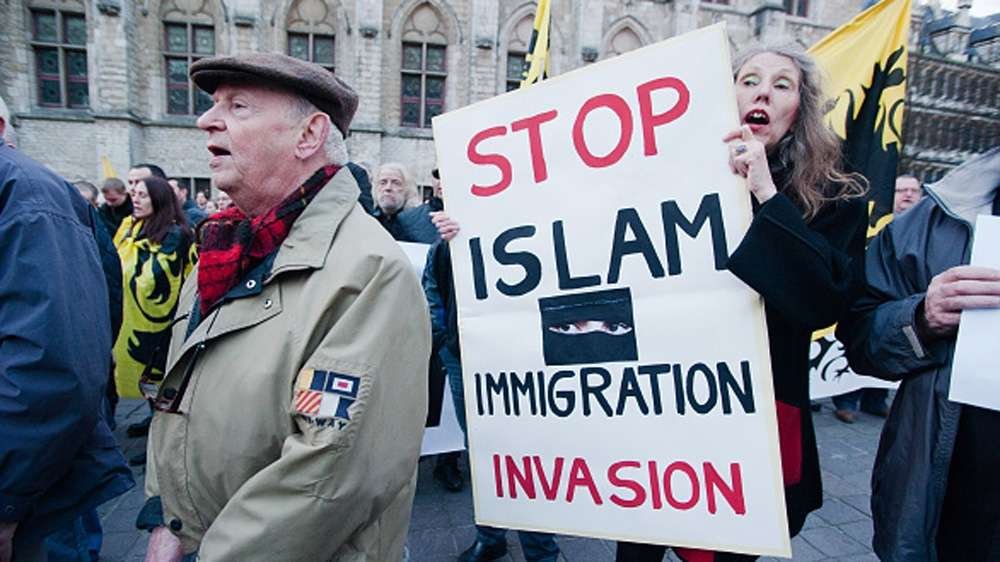
The campaign’s backbone was the Great Replacement, a white nationalist conspiracy theory claiming that migration is a deliberate plot to replace white Europeans with non-white, mostly Muslim, populations. The theory has been discredited, yet it has inspired deadly attacks in several countries.
The operation adapted it for a modern ad market. In classic antisemitic versions, a hidden hand such as George Soros is blamed for directing migration. This campaign gave that role to Qatar, portraying it as a secret power working to “Islamise” Europe. Ads used slogans in that spirit and presented ordinary events, including protests and migration footage, as supposed proof of a coordinated Muslim takeover.
The framing did not stay confined to a single country or government. It treated Muslims collectively as a demographic menace. The people on the receiving end were not politicians or states but ordinary families, students, workers and worshippers.
The scale of the exposure
The report recorded at least 533 million exposures of anti-Muslim, anti-migrant, racist and anti-Qatar advertising in 30 countries, mostly in Europe. That figure is a floor. Because ad libraries retain only part of what was actually run, the authors project a total of around 830.9 million, the source of the roughly 800 million figure in headlines.
The audience breakdown shows who was in the firing line:
- United Kingdom: around 154 million recorded exposures, the largest audience.
- United States: around 100 million.
- France: the most placements, 991 of 2,748.
- Hungary and Belgium: the focus of phase two.
- France, Germany, Italy, the UK and Lebanon: the focus of phase three.
In total, the archive contains 2,126 ads and videos, spread over 37 months and three phases.
Millions of dollars, deliberately hidden
The report models advertising spend at $5.08 million to $8.22 million, and the total cost of the operation, including production, infrastructure and offline events, at $5-11 million. Meta itself disclosed that the first phase alone cost more than $1.2 million, the highest spend it has ever disclosed for an operation targeting EU member states.
Money alone does not explain how it stayed in view. The operation exploited gaps in the system:
- Disguised buyers. Advertising was placed through accounts and companies recorded in Vietnam, Brazil and Belgium, plus German-named TikTok advertisers. None had a disclosed link to the countries being targeted.
- Throwaway identities. Page and payer names changed constantly. The median identity advertised for only three days.
- Dodging transparency rules. Almost none of the ads were filed as political or social-issue content, so Meta’s transparency rules for that category did not apply. For phase one, Meta’s own spend figure was more than a thousand times what the public Ad Library showed for the same pages.
Two intermediaries who responded to the researchers, LT Media in Vietnam and Agência Moll in Brazil, said they had sold advertising assets to a buyer they could not or would not identify.
Propaganda in every format
The creative output was designed to be shareable, entertaining and hard to trace. The report documents AI-generated imagery and songs, video-game and music-festival parodies, Christmas-song parodies that depicted Muslims as displacing European traditions, and repurposed footage of migration and protests. Content about events in Ceuta and French student protests was presented as evidence of a Qatar-directed plan to Islamise Europe.
Much of the raw material was borrowed from the existing anti-Muslim internet. Editing metadata showed that source clips for 18 of the campaign’s Telegram videos came from established far-right accounts, including RadioGenoa, Tommy Robinson, Éric Zemmour and Europe Invasion. The operation kept or adapted their captions and added its own branding and allegations. In effect, it laundered fringe hate content through paid ads and handed it a mainstream audience.
The campaign also spread well beyond social feeds. The report documents billboards in Times Square and Lebanon, a video screened at CPAC 2024, a staged protest outside a store in Atlanta, a network of at least 24 sockpuppet accounts editing Wikipedia articles on Qatar, and a petition under the name of a fake human rights organisation that gathered more than 7,500 signatures.
Targeting Muslims across borders and sects
The report shows the campaign adapting its message to its audience. In Europe it pushed Great Replacement narratives against Muslim migrants and communities. In Lebanon it ran anti-Hezbollah and anti-Iran material aimed at Shia audiences. In the United States and the UK, it reached hundreds of millions of exposures with content that cast Muslims as a threat.
A TikTok strand in Europe pushed regime change in Iran and was already running by 24 February 2026, four days before US-Israeli strikes began. It comprised at least 118 ads with 12.6 million recorded reach, including messages opposing negotiations with Tehran.
Taken together, the findings describe a campaign that did not simply criticise a government or a political movement. It stigmatised a faith and the people who practise it, in many languages, across several regions, for three years.
Timed around elections and unrest
One of the report’s most serious findings concerns timing. The advertising ran alongside democratic contests:
- Phase-one buying in France ran through the months before the June 2024 European Parliament election.
- UK buying stopped on 17 May 2024, days before the general election was called.
- Phase-three buying in Germany ran through the Saxony-Anhalt state election on 6 September 2026.
The campaign remains active in countries approaching major elections, including France and Italy in 2027. The authors also note that it targeted the UK in the months leading up to the anti-Muslim riots that followed the Southport murders in the summer of 2024. The report does not claim the ads caused the violence, but the overlap is troubling. Content that casts Muslims as a hostile force, delivered to tens of millions of people just before a wave of anti-Muslim disorder, deserves serious scrutiny.
Did the propaganda land?
Audience reaction shows that the messaging found receptive viewers. Of 406 comments coded on UK-targeted Facebook ads in 2024, 61% supported Islamophobic views. On YouTube, 28% of 2,560 top-level comments supported the message, while 42% opposed it, and 15% attributed the advertising to Israel. Comment sections are an imperfect gauge, but they show the content generated open hostility toward Muslims and gave it a place to spread.
The Israel connection
The authors assess with “moderate to high confidence” that the campaign originated in Israel. Their evidence includes:
- Production schedule. Edit metadata in the Telegram channel’s videos places production on a Sunday-to-Thursday working week at UTC+3.
- Hebrew-language machines. The files were created on computers with Hebrew drive and folder names.
- A revealing IP address. A Wikipedia editing session exposed an Israeli fixed-line IP address among German proxy exits.
- Known intermediaries. Campaign material passed twice through Johnnie Moore and his firm JDA Worldwide.
- Political alignment. The anti-Qatar, anti-Muslim and anti-Iran narrative fits Israeli politics, and the report draws a comparison with earlier campaigns reportedly contracted by Israel’s Ministry of Diaspora Affairs through the Tel Aviv firm STOIC.
The report does not identify the client that commissioned the operation, and Jones has said the researchers cannot assert definitively that it was Israel. But the finding that the entities involved are based in Israel does not clear the Israeli government. The report itself describes connections between those entities and influence operations run by the Israeli government, and its authors point to precedent in state-contracted campaigns. A covert operation of this size, running for three years from Israeli territory, raises questions about official knowledge and involvement that cannot be set aside by the lack of a named client.
Platforms failed to stop it
Meta removed the first-phase network in about mid-May 2024. Advertising resumed under new identities in November 2024 and returned at scale in October 2025, which the authors say shows how easily platform moderation can be bypassed.
The operation then shifted weight to other platforms. Its 189 YouTube videos on 15 channels drew 132 million views, more than the 94.7 million reach of all 1,473 Facebook ads. Its 359 TikTok ads reached 72.2 million. TikTok tends to remove offending ads but not the advertiser behind them. Six of the YouTube channels were terminated or emptied only in October 2026, and three were replaced under the same names within days. On YouTube, the average video was still online 221 days after it was posted, and none had been taken down.
What needs to happen next
Civil rights groups have responded. The Council on American-Islamic Relations (CAIR) called the report a landmark investigation showing how anti-Muslim bigotry and the Great Replacement conspiracy theory are manufactured and funded to achieve geopolitical goals. Le Monde has examined what the findings mean for France ahead of its 2027 presidential election.
The report points to several urgent failures:
- Ad transparency is inadequate. If nearly all of a campaign this size escaped political-ad labelling, the rules are not working.
- Enforcement has no teeth. Takedowns of pages did not stop advertisers who simply returned under new names.
- Elections are exposed. Paid hate propaganda timed around votes can distort the political climate long before official campaigns begin.
- Muslim communities need protection. Governments, regulators and platforms should treat targeted anti-Muslim disinformation as the serious threat it is.
Manufacturing the “Great Replacement” documents a hidden, well-funded and persistent effort to portray Muslims as an invading force, running for three years across more than 30 countries. It reached hundreds of millions of people, exploited weak platform rules, and was timed around elections and a period of anti-Muslim unrest. Whoever commissioned it, the harm fell on Muslim communities, and the failure to stop it for so long should alarm regulators, platforms and anyone who cares about the integrity of public debate.
The original full report can be found at: https://thegreatreplacement.dysinfluence.com/report