Global greenhouse gas emissions are driving unprecedented environmental shifts, transforming localised weather patterns and placing intense pressure on vital livelihood resources. Whilst climate change is a global phenomenon, its impacts are profoundly unequal. Developing nations with complex topographies bear the heaviest burden, and national-level scientific studies consistently prove that Nepal is one of the worst sufferers of climate change globally.
Despite contributing a negligible fraction to global greenhouse gas emissions, Nepal ranks as the fourth most vulnerable country to climate change in the world. The country operates on the frontlines of the crisis, where shifting environmental baselines act as systemic disruptors.
The Macro Picture: Why Nepal is Ground Zero
Nepal’s extreme vulnerability is dictated by its unique geographic and socio-economic realities. Spanning from the low-lying tropical Terai plains to the highest peaks of the Himalayas, the country experiences dramatic climate variations over short distances. Minor fluctuations in global temperatures trigger massive, compounding disruptions down entire river basins.
Economically, Nepal remains heavily dependent on its rural sectors. Over 70% of the population relies on subsistence agriculture, forestry, and livestock rearing. These sectors are inherently tethered to predictable weather patterns. Furthermore, poverty acts as a severe threat multiplier. With approximately one-third of the population experiencing multidimensional poverty, families lack the financial buffers required to absorb, adapt to, or recover from sudden environmental shocks.
Escalating Climatic Stresses: The Scientific Evidence
Long-term meteorological and hydrological data from the Department of Hydrology and Meteorology reveals an alarming and volatile shift in Nepal’s climate behaviour.
Nepal’s annual mean temperature is rising steadily at an average rate of 0.02°C to 0.03°C per year. This warming is occurring at a much faster and more pronounced rate in the high-altitude mountain regions. Under intermediate emission pathways, temperatures are projected to climb by approximately 0.9°C by 2045.
Hydrological patterns are also becoming increasingly erratic. Whilst overall annual precipitation has shown localised decreases in past decades, monsoon seasons are becoming highly compressed and violent. Climate projections indicate that whilst winters will become progressively drier, wet summer monsoons will intensify, threatening up to a threefold increase in extreme rainfall.
Consequently, Himalayan glaciers have lost billions of tonnes of ice as snow increasingly falls as rain. This rapid melt has left 21 glacial lakes in Nepal categorised as potentially dangerous for Glacial Lake Outburst Floods. Concurrently, the number of people affected by river flooding annually is projected to double to 350,000 by 2030.
Micro-Level Vulnerability: Assessing Livelihood Capitals
To understand the grassroots reality of these macro shifts, it is essential to examine specific communities. Observations within the Koshi River Basin, particularly focusing on the marginalised Mushar communities in the Saptari district, reveal how climate change attacks every facet of daily survival.
Natural and Physical Capital
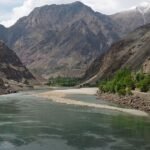
The Saptari district faces an increasing trend in both erratic rainfall and net discharge volume from the Koshi River. Rather than providing a stable resource, the river introduces extreme unpredictability. High-discharge monsoon floods systematically erode riverbeds, destroying agricultural land and washing away vulnerable mud-and-thatch settlements. When the monsoon recedes, it leaves behind barren, sandy deposits that ruin crop yields. Conversely, the region is experiencing prolonged and severe winter cold waves that devastate winter harvests and threaten livestock survival.
Human and Social Capital
These shifting climate patterns have also precipitated a severe public health crisis. The pairing of extreme summer heat with stagnant floodwaters has triggered a surge in waterborne illnesses. Furthermore, rising temperatures are expanding the geographic boundaries of vector-borne diseases. Historically confined lowlands are seeing unprecedented spikes in climate-sensitive illnesses, placing an immense burden on human health and reducing the capacity of communities to work.
The financial and social shocks of these events are highly unequal. Whilst every household feels the pressure of the climate crisis, the burden is most acute among the landless, women, children, and large families within the Mushar community. Without land ownership or cash reserves, a single ruined harvest or flooded home forces families into deep debt. Large families with high dependency ratios find their thin assets stretched to the absolute breaking point.
Survival Strategies: Autonomy and Institutional Limits
To withstand these recurring environmental disruptions, vulnerable communities rely on a mix of localised survival strategies and external institutional frameworks.
Faced with immediate shocks, Mushar households frequently leverage informal, community-run saving and credit groups to smooth over consumption gaps. To compensate for collapsed agricultural incomes, individuals often pivot to alternative, climate-stressed livelihoods, such as selling wood or migrating for day labour. On a structural level, communities have begun forming local disaster management committees and drafting basic disaster preparedness plans to coordinate immediate safety responses during active floods.
Recognising the widening gap in local climate readiness, government institutions and non-governmental organisations have introduced targeted interventions in the Saptari district. These programmes focus primarily on capacity building and climate awareness campaigns, aiming to help families better interpret meteorological alerts and implement proactive household safety measures.