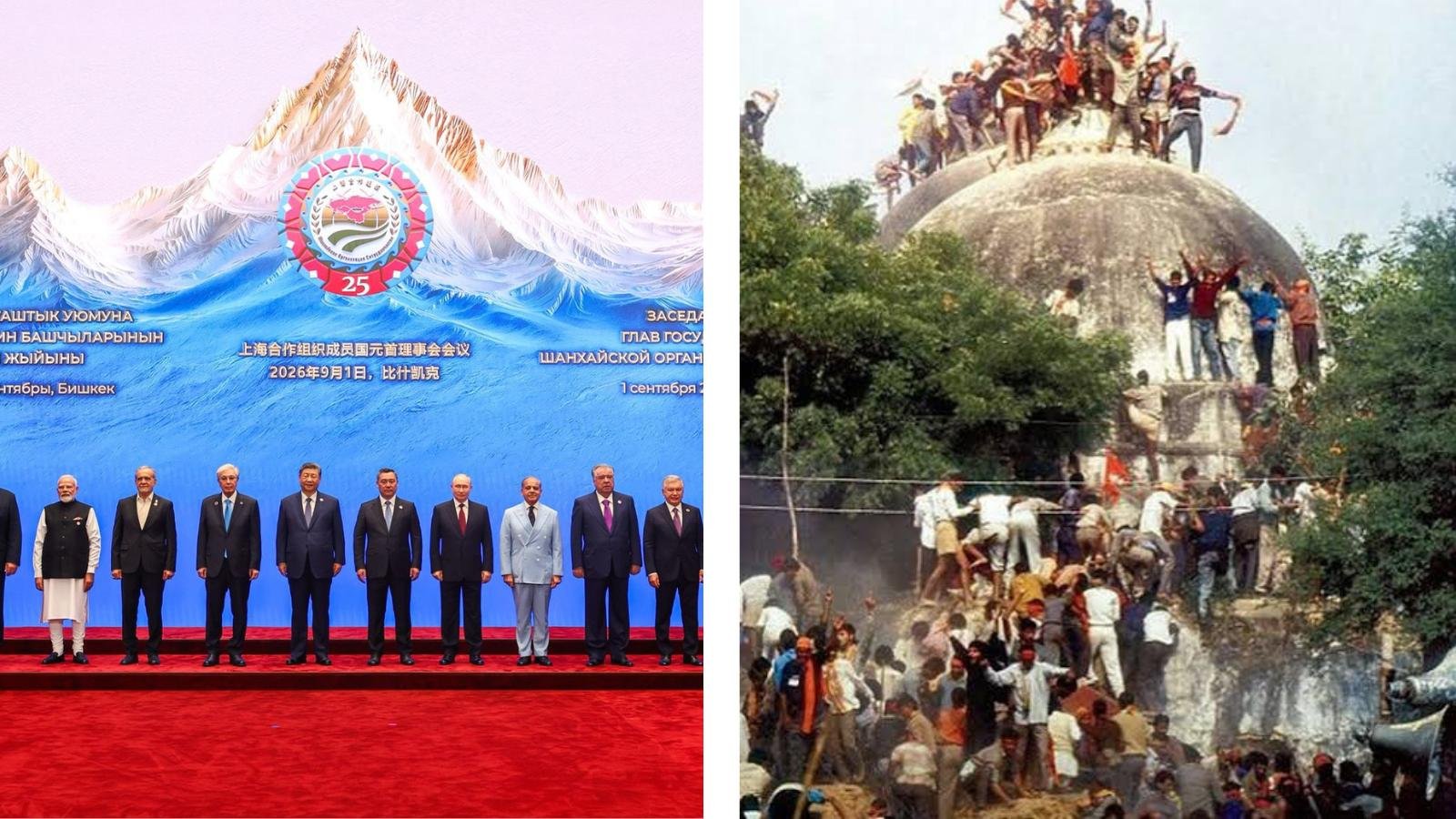
India hosted the first SCO Civilisational Dialogue Forum in New Delhi to promote respect for every civilisation’s contribution to humanity. The SCO is best known for its “three evils” mandate against terrorism, separatism and extremism, and for security and economic coordination. India’s Prime Minister Modi placed the Forum against the backdrop of global discussion dominated by war and unrest, and argued that cultural connection is the strongest guarantee of peace. Whether or not one accepts that claim, institutionalising a cultural track gives the organisation a channel that is less exposed to the disputes that stall its security agenda.
But the Forum’s language sits in sharp tension with domestic developments that historians, opposition parties and minority groups describe as the marginalisation of Muslim and Buddhist heritage, in textbooks, place names, demolitions and court-driven reclassification of sites. The credibility of India as convener of a civilisational dialogue depends on resolving this systematic erasure of Islamic and Buddhist civilisational history in India.
What the Forum promised
The Forum ran from 20 to 22 November 2026 at Purana Qila and brought together 116 delegates from 22 countries. It closed with the ‘Indraprastha Communiqué’, which commits signatories to respecting every civilisation as an equal voice and to a broad definition of heritage covering monuments, manuscripts, living traditions and knowledge systems. It also commits them to cooperation on digitisation and anti-trafficking, and to collaborative conservation of Buddhist, Silk Route and Indo-Persian traditions.
The Prime Minister’s inaugural address leaned on Islamic and Central Asian contributions to India’s culture, citing the link between Central Asian Maqam and Indian Raga, Sufi influence on Qawwali, and the Samarkand and Herat garden traditions behind the Charbagh. These are generous words. The question is whether domestic practice matches them.
The domestic record critics point to
The Forum’s rhetoric of respecting “every civilisation as an equal voice” sits uneasily with a domestic record that critics describe as the systematic diminishing of Muslim and Buddhist pasts.
Schoolbooks. The new Class 7 NCERT textbooks dropped the Delhi Sultanate and Mughal Empire, replacing them with chapters on ancient dynasties, “sacred geography” and government initiatives. This followed 2023 revisions that had already cut Mughal chapters from Class 12, which historians criticised as attempts at erasure that favour an idealised, conflict-free narrative. A reader of the Communiqué’s “equal voice” principle might ask which equal voice remains in a curriculum that removes some seven centuries of Sultanate and Mughal rule.
Erasing Muslim Names. Allahabad, a city founded by Akbar, became Prayagraj in 2018. A Communist Party MP wrote to the President that renaming the Mughal Gardens removed an essential part of Delhi’s history, and critics cite the Prime Minister’s 2014 reference to “1200 years of slave mentality” as evidence that the medieval Muslim era is treated as a period to be overcome.
Mosques, tombs and shrines. No official count exists of Muslim religious structures demolished since 2014, and any precise figure should be treated with caution. Partial compilations point in one direction. One compilation reports more than 2,100 actions against Muslim religious and community sites since 2020, but its own authors caution that it blends demolitions, partial removals and evictions and should not be read as a tally of razed mosques. A separate compilation of 861 sites lists 57 mosques alongside 563 mazars and 226 madrasas. Uttarakhand reports removing 538 mazars, and Gujarat told its assembly in 2024 that it had demolished 108. Authorities generally describe these as removals of encroachments on public land. Opposition leaders say they fall disproportionately on Muslim sites.
Fatehpur. On 11 August 2025, around 1,000 activists carrying saffron flags entered a roughly 200-year-old tomb in Fatehpur, damaged two shrines inside and claimed it was a temple. The Quint reported they were led by the local BJP district president, who was not initially named in the police complaint. The site is recorded as the Maqbara Mangi in land records, and its custodian said the claimed Thakur temple stands elsewhere on the plot. The crowd passed through a police blockade despite armed constabulary on site, which fed opposition charges of lax security. Police later booked over 150 people.
Kamal Maula Mosque. In Dhar, Madhya Pradesh, the Kamal Maula Mosque, generally dated to the early 14th century and so about 700 years old, was declared a temple of the goddess Vagdevi (Saraswati) by the Madhya Pradesh High Court on 15 May 2026. The ruling ended the 2003 arrangement of Hindu worship on Tuesdays and Muslim prayers on Fridays. It relied on an ASI survey finding that the present structure reused parts of an earlier temple. Muslim petitioners point out that the site is recorded as a mosque in old revenue records, and the ASI itself has no record confirming when the mosque was built. Historians writing in The Wire say the verdict misreads the sources and the common practice of architectural reuse. The Supreme Court agreed in July 2026 to list the appeals. The point for this analysis is the outcome: a 700-year-old place of Muslim worship is now out of bounds to the community that prayed there.
Babri Masjid. The episode recalls the 1992 demolition of the 500-year-old Babri Masjid, which analysts widely credit with lifting the BJP to national prominence. The larger concern raised by historians and rights groups is not only about land or buildings. They argue that contesting and removing Islamic structures, whether through litigation, public mobilisation or administrative action, and often under the banner of “reclaiming Hindu heritage”, weakens the plural histories those spaces carried and pushes the cultural landscape toward a single majoritarian narrative.
Buddhist heritage. The Forum’s Communiqué names Buddhist traditions as shared heritage. Yet at Bodh Gaya, Buddhism’s holiest site, the Mahabodhi Temple has been managed for 76 years by a committee of four Hindus and four Buddhists under a 1949 Bihar law, and Buddhists protested across India in 2025 demanding sole control. A Hindu monk took over the temple around 1590 and ran it as a Hindu monastery, a legacy that Buddhist groups see as unresolved. Separately, politicians and commentators argue that other prominent shrines were once Buddhist monasteries, including Badrinath, which Samajwadi Party leader Swami Prasad Maurya has said was a Buddhist monastery until the eighth century. Those claims are contested and mostly concern the medieval past, so they are better read as an argument that heritage claims cut in several directions than as evidence of present-day policy.
The hypocrisy charge
Critics draw three contrasts. First, India celebrates Sufi, Persianate and Buddhist heritage before diplomats while reducing the Sultanate and Mughal periods in its own classrooms. Second, it asks other SCO members to protect heritage from trafficking and disaster, while Muslim monuments at home face demolition drives, litigation and mob action. Third, it presents “equal voice” as a principle of civilisational respect, yet one of its own High Courts has reclassified a medieval mosque, and the state that governs Bodh Gaya has not given Buddhists the sole control they seek.
The Forum itself illustrated the limits. Pakistan’s minister attended, but the Culture Secretary confirmed there were no formal bilateral talks, a reminder that cultural dialogue operated alongside, not above, political divides. Delegates were also not asked to confront any of the contested cases above.
Assessment
The evidence supports a narrower claim than the strongest critics make and a broader one than the government concedes. There is no verified count of demolished mosques, the Kamal Maula outcome was judicial rather than a forcible takeover, and the Bodh Gaya dispute is about control rather than removal. But the combined pattern of textbook cuts, renaming, selective enforcement allegations, court-driven reclassification and an unresolved Buddhist demand gives real force to the charge that India’s civilisational rhetoric is ahead of its practice.
Three developments will test this: whether the Supreme Court’s Bhojshala ruling protects the status of the Kamal Maula mosque or confirms the High Court’s decision, whether the Bodh Gaya Temple Act is reformed, and whether the SCO adopts a biennial Forum with room for contested cases on its agenda.