From the town of Metula on Israel’s Lebanese border to the city of Eilat on the Red Sea coast, the eyes of the Israeli public remained glued to the television screens on the night between November 3 and 4.
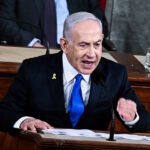
Although these elections were taking place thousands of kilometres away in the United States, their direct impact was tied to the political survival and power of Israeli Prime Minister Benjamin Netanyahu. This was perhaps the only country where the formation of the next government following elections depended on the political turn of another nation.
Just a week earlier, Israel’s Arab-Palestinian citizens had dealt Netanyahu a severe blow in the electoral arena, depriving his right-wing governing coalition of a parliamentary majority. Yet, this politician was unwilling to relinquish power under any circumstances.
As news of Democratic victories in the U.S. elections poured in, Netanyahu’s hopes of returning to the premiership began to fade. His prospects of holding onto power depended heavily on his close, personal relationship with U.S. President Donald Trump.
Eisenkot Tapped to Form a Government
Immediately following the U.S. elections, Israeli President Isaac Herzog formally announced that he would task Gadi Eisenkot, leader of the ‘Yashar’ party and former military chief, with forming Israel’s new government.
Constitutionally, Eisenkot will have 28 days to form a government, with the president holding the legal authority to grant a 14-day extension under unavoidable circumstances. Should he fail to form a government within this timeframe, the mandate could once again go to Netanyahu.
During President Herzog’s consultations with various parliamentary factions, Eisenkot secured the backing and recommendations of 67 lawmakers for the office of prime minister, a clear majority in the 120-seat Knesset. The ultra-Orthodox party United Torah Judaism (UTJ), which holds seven seats in the Knesset and had until now been in Netanyahu’s camp, has also signaled its support for Eisenkot, enabling a government to be formed without the formal inclusion of Arab-led parties. In the October 27 Knesset elections, Netanyahu’s right-wing bloc managed to capture only 53 seats in the 120-member legislature.
On the other hand, the Jewish opposition led by Gadi Eisenkot held 48 seats, while the two electoral fronts representing Arab and Palestinian leadership, the “Joint List” and “Ra’am”, achieved an unprecedented and historic breakthrough, together securing 19 seats.
As the U.S. election results began to unfold, Israeli opposition leader Yair Lapid warned that Netanyahu’s continued tenure in power had become a grave threat to Israel’s security.
He argued that Netanyahu’s policies had plunged Israel into diplomatic isolation and that his return to power would expose the country to international sanctions, a global boycott, and a rift with the United States.
The Arab Vote Surges Past 80%
In an effort to oust Netanyahu from power, voter turnout in Arab communities surged past 80% for the first time. In Rahat, the largest Bedouin town in the Negev Desert in southern Israel, a 65-year-old Bedouin woman cast a ballot for the very first time in her life.
Although there is a little optimism about Eisenkot among the Arab population, the woman, draped head-to-toe in a black abaya, said in a sobbing voice:
“The ruthless attitude of the current government has torn our souls apart.”
Her entire family lives in extreme destitution in one of the Negev’s “unrecognized” Bedouin villages, where the state has extended neither electrical wiring nor access to clean drinking water.
If residents build a modest wooden or tin shed to shield themselves from the bitter cold or scorching heat, bulldozers dispatched by the extremist Minister of National Security, Itamar Ben-Gvir, arrive to reduce those roofs to rubble.
On election day, countless images and videos emerged showing residents of Bedouin villages arriving to vote on the backs of camels, horses, and donkeys. Eking out a path through dust storms and remote, fragmented settlements to reach the polling booth required a long, exhausting, and perilous journey.
In numerous Arab towns and cities, voters voiced grave complaints regarding harassment by government officials, unnecessary police roadblocks, and deliberate slowdowns in the voting process.
Adalah, the leading legal center for Arab minority rights in Israel, issued an official documented report stating that police had dragged out the voter identification process to an extraordinary degree and subjected citizens to humiliating interrogations at the entrances of polling stations to intimidate them.
Speaking to The Times of Israel, Nimr Abu Shaiban, an ordinary citizen from Rahat, shared that his wife and daughters had never even considered voting under normal circumstances. With a voice laden with pain, he said:
“The country has fallen into such cruel and wicked hands that today every single child and woman in our village has come out to vote.”
Netanyahu’s Response to the Turnout
This unprecedented surge among the Arab population sent panic reverberating through Netanyahu’s political establishment.
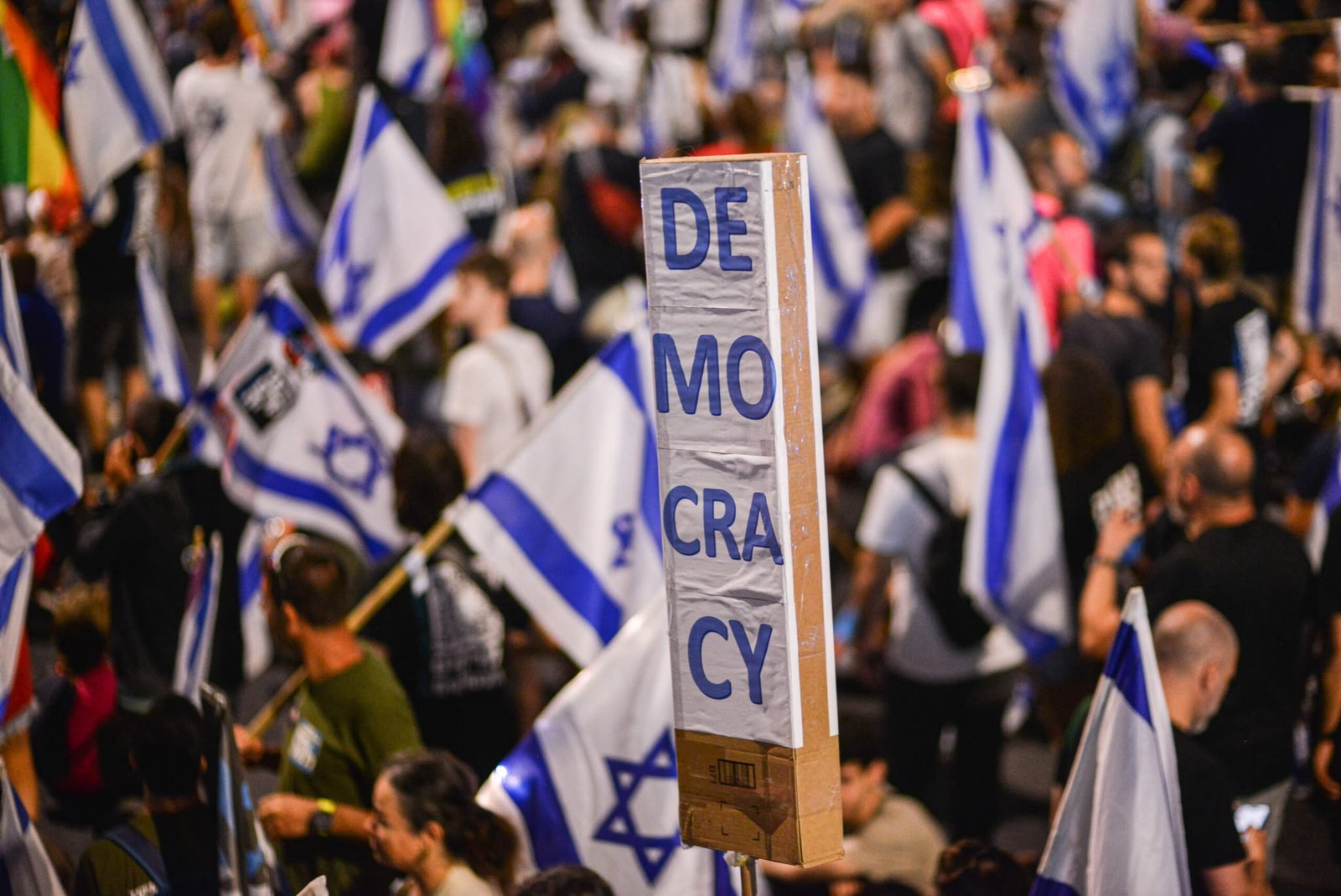
In any genuine and balanced democratic society, a political leader would wholeheartedly welcome the mass participation of a segment of the electorate that had long felt alienated and estranged from the system. Instead, Netanyahu framed this democratic mobilization of Palestinian citizens, who make up roughly 20 percent of Israel’s total population, as an “emergency security threat” to the country.
Driven by fear, he issued frantic appeals to his traditional Jewish supporters, urging them to rush to the polling stations.
Images and videos of barefoot Bedouin voters emerging from the deserts of Negev were portrayed across electronic and social media as a “political threat,” designed to terrify Zionist voters into believing that Arab participation would utterly destroy the right wing’s hold on power.
The Prime Minister was intensely agitated over why a substantial portion of his country’s population was exercising its fundamental democratic and civil rights. Propelled by this political awakening, the Joint List captured 11 seats, while Mansour Abbas’s Ra’am succeeded in winning 8. Their combined total of 19 seats represents the biggest, unprecedented, and most historic milestone for Arab and Palestinian-led parties in Israeli parliamentary history.
An Arab Vote Too Big to Ignore
For years, Israel’s Zionist and liberal opposition parties indulged in the delusion and self-deception that they could oust Netanyahu without bearing the stigma of relying on Arab voter support. The October elections shattered this narrow, archaic political strategy, exposing its limits. Had it not been for this peerless and extraordinary turnout by Arab citizens, Netanyahu’s fascist coalition would have easily secured an absolute majority in the Knesset once again.
Yet the bitter irony is that, despite emerging as an inevitable and decisive electoral force, this status for Palestinian citizens failed to open the door to equal partnership in a future government.
Palestinian politician and prominent Joint List figure, Ahmad Tibi, told the author that he has absolutely no desire or insistence on securing cabinet portfolios or ministerial posts. Their sole objective was to oust Netanyahu from power. He noted:
“We spoke of paving the way for an alternative civilian government through wise compromise with the opposition, primarily to safeguard the interests of our oppressed Arab community, defend it, and bring down Netanyahu’s fascist government.”
Back in the 1990s, Arab members of parliament similarly provided a parliamentary lifeline to Yitzhak Rabin’s government during the Oslo Accords.
Tibi hailed the electoral participation of Palestinian voters as a monumental historical and political victory that shattered Netanyahu’s malicious designs. He sharply condemned the campaign waged by malicious elements aligned with Netanyahu to delegitimize and criminalize the constitutional votes of Palestinian citizens through fabricated allegations of electoral fraud.
The Arab leader expressed firm hope that this electoral verdict would deny extremist racists like Itamar Ben-Gvir and Bezalel Smotrich any path back to ministerial seats. Despite deep-seated differences between the two Arab electoral factions, Tibi signaled clear intent to establish a joint working relationship with Mansour Abbas’s Ra’am.
The Parties Behind the Palestinian Vote
For readers less familiar with the intricate dynamics and nuances of Israeli politics, understanding the ideological profiles of these political factions representing Palestinian voters is extremely essential.
The Joint List is an electoral alliance uniting three distinct political movements with unique ideologies: Hadash, Ta’al, and Balad.
Hadash is a left-wing, communist-rooted front whose ideological foundations lie in traditional socialist movements. Incorporating both Arab and non-Zionist Jewish members on equal footing, the party focuses heavily on ethnic equality, the rights of the working class, and unconditional opposition to the Israeli military occupation of Palestinian territories.
Ta’al, led by Ahmad Tibi, functions primarily as a parliamentary vehicle fighting for the democratic, civil, legal, and political rights of Arab-Palestinian citizens living inside Israel.
Balad is built strictly on the ideology of Palestinian nationalism and self-determination. Its most revolutionary platform advocates transforming Israel into a democratic state for all its citizens, completely stripping away religious or ethnic distinctions. In short, it rejects the constitutional framework granting Jewish national identity structural supremacy over other citizens. Balad insists on the collective national rights of Palestinians and has historically stood fiercely opposed to joining or propping up any government established on Zionist foundations.
On the other hand, Mansour Abbas’s Ra’am, also known as the United Arab List, pursues a fundamentally different political methodology. The organization stems from the southern branch of the Islamic Movement in Israel.
Abbas’s core political philosophy rests on the premise that oppressed Palestinian citizens living within Israel cannot indefinitely postpone their demands, such as better schools, building permits for homes, equitable municipal budgets, and the eradication of crime and violence in their neighborhoods, until a Palestinian peace agreement is reached or a state is established.
This pragmatism led Ra’am to make history in 2021 by becoming the first Arab party to join a coalition government, partnering with Naftali Bennett and Yair Lapid.
In 2026, Mansour Abbas took another extraordinary step by formally detaching his party’s political decisions from the supremacy of the Islamic Movement’s religious Shura Council, granting the party a purely independent and non-clerical civic identity.
What the Arab Parties Are Asking For
Joint List Chairman Youssef Jabareen told the author that both Arab alliances presented modest baseline demands. These include an unsparing, non-discriminatory state crackdown on organized crime mafias within Arab communities, the approval of master plans for Palestinian villages and towns alongside expanded municipal boundaries, and the practical enforcement of equal civic rights for Arab citizens inside Israel, all of which are ostensibly the responsibility of any government.
The Joint List’s additional demand called for the revival of the Oslo Accords, including serious and purposeful diplomatic negotiations toward establishing an independent Palestinian state. This final demand could become the bitterest and unswallowable bone in the throat for Eisenkot and his Zionist-Jewish allies.
Consequently, they have heavily prioritized forming a government without relying on direct Arab party backing.
In an interview with the author, prominent Balad leader Sami Abu Shehadeh exposed the systemic hypocrisy of the Israeli political system, stating:
“When viewed through pure democratic realities, Netanyahu’s fascist camp lost the election, and that chapter should have been closed then and there.”
However, such is the state of the deep-seated, incurable racism embedded within Israeli society and its political structure that it made them entirely unwilling to sit alongside Arab parties. Pointing to Eisenkot’s Moroccan-Jewish heritage with biting irony, Abu Shehadeh noted:
“Eisenkot himself, despite his Arab and specifically Moroccan roots, openly pledges in his campaign rallies that he will not sit with Arab representatives in parliament. What greater proof does one need of a sick and racist society?”
Why the Arab Vote Surged
The force driving Arab citizens to the ballot box was not merely the devastating war unleashed on Gaza. Across the Galilee, from Nazareth and Sakhnin to Tamra and Shefa-Amr, Palestinian citizens are locked in a struggle against horrific economic and social disparities.
Immediately adjacent to affluent, modern, and fully serviced Jewish settlements stand neglected Arab towns ravaged by crumbling infrastructure, broken sewage systems, densely packed dilapidated housing, and severe shortages in municipal funding. According to a comprehensive 2024 statistical report by the Israel Democracy Institute, 38.4 percent of Arab families are forced to live below the poverty line. As a result of this state neglect, the flourishing organized crime and bloodthirsty mafias have taken Arab society hostage.
Prominent Israeli political analyst Tal Schneider described this vast and terrifying gulf between Jewish and Arab societies as “soul-crushing,” flatly rejecting the Zionist propaganda trope that this bloodshed stems from any inherent flaw in Arab society.
Instead, she pointed out that this devastation is the direct consequence of biased policing, manufactured poverty, and decades of deliberate under-allocation of state resources to Arab areas. While the greatest torment for the unprotected Bedouin tribes of the Negev is the constant terror of Israeli bulldozers demolishing their tents alongside a lack of clean drinking water, the struggles in northern Israel’s Arab cities revolve around housing shortages, joblessness, resource cutoffs, and protection from mafia violence.
On top of all these atrocities, the devastating bombardment ongoing in the Gaza Strip and the worst brutal military occupation in the West Bank had turned this election for the Arab public into something far greater than their personal issues, a national and existential battle.
For decades, Palestinians holding Israeli citizenship wrestled with an ongoing philosophical dilemma: did participating in Knesset elections confer moral and legal legitimacy upon a state constitutionally structured around Jewish supremacy?
Consequently, a significant segment historically chose to boycott elections, while another camp argued that utilizing this parliamentary platform was vital to counter fascist policies and defend their community.
Yet in this historic election, millions of Palestinians concluded that remaining silent or boycotting served only one direct beneficiary: the fascist alliance of Netanyahu, Itamar Ben-Gvir, and Bezalel Smotrich.
Thus, this historic and monumental surge in turnout was the natural culmination of burning frustrations, collective fear, and unified resolve.
The Mizrahi and Ashkenazi Divide
The election also exposed another deep, historical contradiction lurking just beneath the surface of Israeli Jewish society.
Israel’s broader Jewish population is divided into two primary demographics: Ashkenazi Jews, whose ancestors hail from Europe, and Mizrahi Jews, whose roots trace back to the Middle East, Iran, and North Africa. Since Israel’s founding in 1948, the European Ashkenazi elite has maintained a firm grip on all political, military, judicial, educational, and economic institutions.
Conversely, millions of Mizrahi Jews who immigrated from Morocco, Iraq, Yemen, and other Arab and African lands were relegated to third-class citizenship, crammed into impoverished transition camps, denied opportunities, and subjected to severe racial contempt and humiliation at the hands of the Ashkenazi elites.
It was on the back of this anti-Ashkenazi revolt by the Mizrahi community that Menachem Begin’s Likud party shattered the monopoly on power held by the Ashkenazi-led Labor Party, whose predecessors had founded Israel, in the 1977 elections.
Since that turning point, Likud has built a rock-solid base of support among Israel’s marginalized, working-class Mizrahi voters. Yet, this shift has given rise to a deeply intriguing, paradoxical, and unique political landscape.
Benjamin Netanyahu himself hails from a privileged European Ashkenazi background, much like the majority of Likud’s senior leadership. Yet, look at the irony: the most loyal and fervent voter base of Netanyahu’s party consists of Jews of Mizrahi descent. On the other hand, Gadi Eisenkot, the main opposition leader challenging Netanyahu, is himself a Moroccan Mizrahi Jew.
However, the primary stronghold of his party, ‘Yashar,’ and his electoral alliance lies within Israel’s liberal, secular, privileged, and economically affluent urban classes, demographics historically tied to the traditional Ashkenazi elite. What a striking paradox: an Ashkenazi-born leader, Netanyahu, enjoys the spoils of power by capitalizing on the Mizrahi community’s historical grievances against the old establishment; meanwhile, a former general of Mizrahi descent, Eisenkot, is opposing Netanyahu in a bid to restore that very same old Ashkenazi liberal elite.
What Eisenkot Represents
If he forms a government, Eisenkot will be the first Moroccan-descent Mizrahi politician to reach the office of prime minister. Yet no one should harbor the illusion that Eisenkot’s Moroccan-Arab heritage makes him sympathetic to Palestinian rights, sentiments, or aspirations.
In reality, Eisenkot represents an alternative, polished face to Netanyahu’s authoritarian governance. As a former Chief of Staff of the Israeli military, he has been a staunch and outspoken opponent of establishing an independent, sovereign Palestinian state.
The Zionist partners within his coalition hold stances on fundamental Palestinian rights no less brutal or rigid than Netanyahu’s current extremist allies. Former Prime Minister Naftali Bennett is a vocal advocate for formally annexing vast swathes of the occupied West Bank into the Israeli state.
On the other hand, former Defense Minister Avigdor Lieberman has always been one of the fiercest advocates for launching the harshest and most brutal military campaigns against the Palestinians. Both of these leaders have previously held key ministerial portfolios in Netanyahu’s own cabinet, operating under his wing. While their political and personal clashes with Netanyahu are genuine, mistaking this power struggle for support of Palestinian self-determination and freedom would be a grave mistake.
Many astute political analysts and observers express a valid concern: Netanyahu’s departure from the scene might cause international diplomatic and moral pressure on Israel to dissipate, even though core state policies designed to crush Palestinians, expropriate their lands, and pursue ethnic cleansing would continue uninterrupted.
A potential Eisenkot government would likely project itself globally as a “civilized, conscious, moderate, and law-abiding” alternative.
B’Tselem, Israel’s prominent human rights organization, pierced this veneer, warning that international pressure on Israel should never depend on who occupies the prime minister’s chair in Tel Aviv.
B’Tselem representatives Yuli Novak and Yair Dvir have warned that holding Netanyahu solely and exclusively responsible for this historic devastation and dispossession of the Palestinians would amount to turning a blind eye to historical facts. In an interview with the author, Dvir stated:
“We do not see even the remotest possibility of any genuine and fundamental change occurring from within the Israeli state apparatus.”
According to Executive Director Yuli Novak, the construction of illegal Jewish settlements, the ethnic cleansing of Palestinians, sweeping military domination, and the system of apartheid existed with equal brutality long before Netanyahu took power.
She noted that Netanyahu’s departure from the prime minister’s office will not automatically dismantle the oppressive state institutions, military courts, restrictions, and laws that have trapped Palestinian lives in a bloody vice for decades.
Palestinians Who Cannot Vote
There could be no greater proof of this stark apartheid contradiction within the Israeli system than the fact that Jewish settlers living in illegal settlements in the occupied West Bank enjoy full democratic freedoms and cast their votes near their homes to elect Israel’s parliament. Yet, right next door to those very settlements, Palestinians, hemmed in behind barbed wire and living under the shadow of guns and harsh Israeli military martial law imposed to protect those settlements, possess no voting rights whatsoever.
The 2.2 million besieged residents of the Gaza Strip also hold zero voting rights in Israeli parliamentary elections, even though every decision of life and death for them, from which bomb will fall on their heads to whether a morsel of food will reach their mouths, is dictated by that very same Israeli parliament and military establishment.
Similarly, millions of Palestinian residents living in occupied East Jerusalem are relegated to the status of “permanent residents” rather than citizens, locking them out of national parliamentary elections.
The harrowing consequence of this racist system is that millions of human beings are reduced to living like insects under the absolute military and state rule of Israel, stripped of any democratic right to elect or remove the very regime that dictates their basic right to exist.
What the Arab Vote Changes Next
While the recent elections have offered no permanent solution to this grave, bloody, and fundamental state contradiction, they have laid bare one undeniable truth: when the marginalized and oppressed Palestinian citizens living inside Israel set aside their internal grievances, unite, and turn out at the polls in record numbers, they can emerge as a decisive and strategic electoral force capable of pulling the rug out from under even the most formidable Zionist heavyweights.
It was the irresistible tide of Arab votes that barred Netanyahu from fulfilling his dream of reclaiming a parliamentary majority. Yet whether this Palestinian electoral weight will translate into genuine and lasting shifts in state policy remains an open and deeply questionable prospect.
Israel’s Jewish opposition parties must now look in the mirror and decide: is their anti-Arab and anti-Palestinian racism and animosity more important than their stated shared goal of ousting Netanyahu?
As for the 65-year-old Bedouin woman from Rahat who cast her ballot for the first time in her life, her core and immediate concerns remain unchanged: an electrical connection for her hut, clean drinking water, the legal right to repair her roof, and protection from the terror of Israeli bulldozers. For Palestinian citizens across Israel, the fundamental question remains one of equality, security, and equal recognition in the political and civic life of the country.
These election results have undoubtedly upended the traditional arithmetic of Israeli parliamentary politics. Yet, will this shake-up bring any meaningful change to the crushed lives of the Palestinians? That will depend not merely on who occupies the prime minister’s seat, but fundamentally on whether the global conscience and the international community can muster the courage to hold whatever new government takes shape in Tel Aviv to account for its crimes.
Netanyahu’s political destiny may be tethered to the ebbs and flows of Washington’s halls of power. Still, the tremor that brought the chill of defeat to his brow and shook his regime to its core did not originate thousands of miles away in the American capital; it rose from his very doorstep, from the outlying villages, towns, and marginalized communities of Palestine. By shattering decades of apathy, an oppressed people demonstrated that when they summon the will, even a seemingly humble vote placed in their hands can reduce history’s most hubristic idols to dust.
All eyes around the world are now fixed on a stark question: does Israel’s so-called liberal opposition possess the moral courage to reckon with this historic democratic verdict and its consequences, or will it once again retreat into the familiar embrace of entrenched racism?
Iftikhar Gilani is a Kashmiri journalist and researcher based in Ankara, Turkiye with three decades of experience reporting from South Asia and the Middle East. He is the author of the book, “My Days in Prison” published by Penguin and the Urdu book “Ikkeeswi Sadi ka Bharat aur Musalman: Siyasat aur Samaaj ke Aeenay Mai”.