Pakistan stands at a decisive point in its history. During the next 25 years, our population is expected to increase dramatically and may nearly double. Feeding this expanding population, creating sufficient employment, and providing education, healthcare, housing, water, energy and other essential services will require planning on an unprecedented scale.
We cannot wait for these pressures to overwhelm our institutions. Pakistan must immediately prepare, and then consistently implement, a comprehensive 30-year national development plan.
Pakistan is a nuclear-armed state with an exceptionally important geographical position, abundant natural resources, a large and resilient population, and immense agricultural and industrial potential. We already possess many of the attributes of a regional power. If we strengthen our economy, establish internal peace and social harmony, and reform our governance, Pakistan has the capacity to emerge as a major global power.
The Fundamental Test of Every Public Decision
Before taking any major policy or economic decision, our leadership and institutions must ask one fundamental question: will this decision benefit a small group of privileged families, or will it improve the lives of ordinary Pakistanis?
This principle should become the foundation of national decision-making. The government cannot remain an instrument for protecting personal, political or commercial interests. Self-interest must be removed from governance and replaced by merit, competence, transparency, accountability and genuine public service.
Policies must be judged by the number of citizens they lift out of poverty, not by the profits they generate for a limited elite.
Transforming Geography into Prosperity
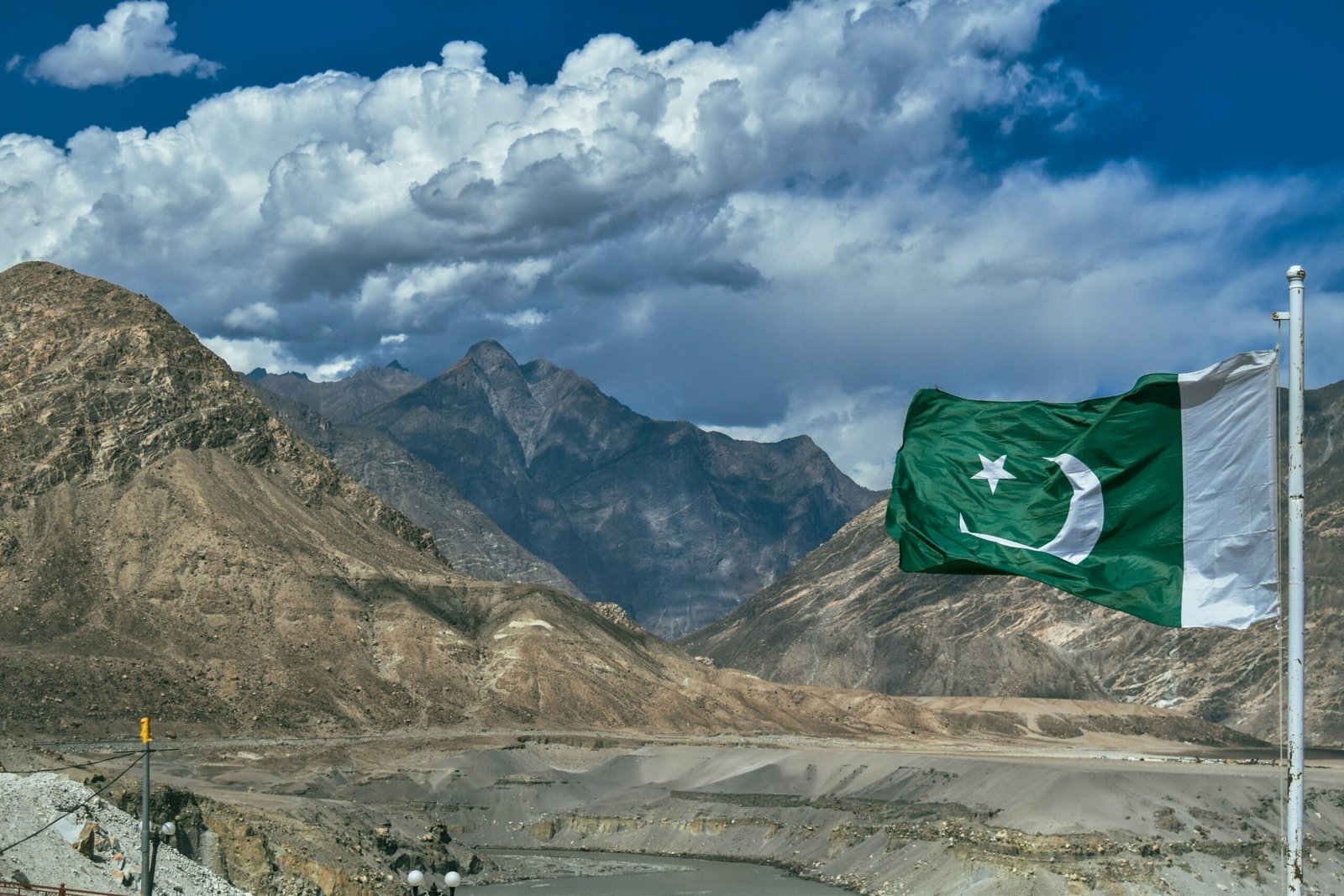
Pakistan possesses extraordinary geographical diversity. It stretches from the Arabian Sea to the towering mountains of Gilgit-Baltistan, from the irrigated plains of Punjab and Sindh to the deserts of Tharparkar, and from the rain-fed regions of Potohar and Karak to the mountainous western border.
Unfortunately, poverty remains extremely high in many mountainous, desert and border communities. Nevertheless, even the poorest areas possess valuable economic opportunities.
The Arabian Sea provides opportunities in fisheries, ports, shipping, maritime commerce and tourism. The mountains contain minerals, water resources, forests and enormous tourism potential. The irrigated plains provide food security, livestock, cotton and raw materials for agro-based industries. The deserts offer possibilities in solar energy, livestock, mining and specialised agriculture.
No region of Pakistan is inherently poor. People remain poor when resources are mismanaged, opportunities are monopolised and governance fails to serve the population.
Every region must be developed according to its natural strengths. With merit-based and selfless governance, Pakistan’s geographical diversity can become one of its greatest economic advantages.
Poverty Is Also a National Security Threat
Poverty, unemployment and social exclusion do not remain confined to the economic sphere. They create conditions in which crime, robbery, organised violence, narcotics, extremism and terrorism can flourish.
The growth of violent crime in Karachi and the persistence of terrorism in parts of Khyber Pakhtunkhwa and Balochistan cannot be separated from economic deprivation, weak governance and the absence of legitimate opportunities.
The law must certainly be enforced, and the state must protect its citizens. However, policing and military operations alone cannot permanently resolve problems rooted in poverty and exclusion.
A young person with education, employment and a meaningful stake in society is far less vulnerable to recruitment by criminal, terrorist or hostile networks. Economic development must therefore be recognised as an essential pillar of national security.
The detailed solutions to these problems can be presented in subsequent policy papers, but the central principle must be understood now: lasting peace requires justice, opportunity and economic inclusion.
Food Security Is National Security
A country that cannot feed itself cannot remain fully sovereign. Wheat, Pakistan’s principal food staple, must be treated as a matter of national security rather than being left entirely to uncontrolled market forces.
Farmers have suffered serious losses during the past three years because of rising input costs, uncertain procurement policies, unstable prices and inadequate institutional support. Consequently, many farmers are considering shifting from wheat to other crops.
If this trend continues, Pakistan may become increasingly dependent on imported wheat. Dependence on foreign suppliers for a staple food can become a source of political and economic vulnerability. During the Cold War, food supplies were sometimes used to exert pressure on states; Pakistan must not place itself in a similarly vulnerable position.
The government must establish a predictable and sustainable wheat policy. It should protect farmers against catastrophic losses, ensure timely and transparent procurement, maintain strategic reserves, and improve productivity through certified seed, mechanisation, agricultural research and better water management.
Food security is not merely an agricultural issue. It is fundamental to our sovereignty.
A New Economic Strategy for the Western Border
Fencing Pakistan’s western border may have been considered necessary for security, but it also disrupted centuries-old customs, family relationships and local trading patterns. Alternative economic opportunities were not adequately created for the affected communities.
People must feed their families. When legitimate livelihoods disappear, smuggling, criminality and recruitment by hostile or extremist groups become more likely.
A practical solution would be to establish regulated commercial markets and border-trade zones, similar in scale and organisation to the markets of Hayatabad, in every suitable border district. Properly documented and monitored trade with Afghanistan and Iran could provide employment, generate public revenue and reduce incentives for illegal activity.
These markets should include banking facilities, customs services, storage and transport infrastructure, security arrangements and transparent digital documentation. Local residents must receive priority in employment and commercial opportunities.
Security cannot be sustained by fences alone. It must be reinforced by livelihoods, trade, public participation and confidence in the state. If people living along the border are economically secure, they will become the strongest defenders of Pakistan’s territorial integrity.
Let Mineral Wealth Enrich Local Communities
Kashmir, Gilgit-Baltistan, Khyber Pakhtunkhwa and Balochistan contain enormous mineral potential. These natural resources belong ultimately to the state and its people. Yet mineral concessions are frequently granted to wealthy investors while the communities living above these resources remain desperately poor.
Why should people living in mineral-rich regions continue to experience such high levels of poverty?
A fairer model would give local communities a direct ownership stake in mining leases, royalties, processing facilities and associated enterprises. The people of mineral-producing areas should be partners and shareholders, not helpless spectators.
Pakistan should consider establishing a specialised Corps of Minerals, drawing on the organisational and technical capabilities of the Pakistan Army while operating within a transparent national framework and under appropriate civilian policy oversight.
This specialised body could provide:
Geological surveys and scientific exploration; laboratory testing and mineral certification; technical training for local communities; security for strategic mining areas; environmentally responsible extraction methods; domestic processing and value addition; and national and international marketing support.
Raw minerals should not simply be extracted and exported. Pakistan must process them domestically, manufacture higher-value products and retain the resulting employment, technology and wealth.
International companies should not be allowed to dominate strategic mineral resources or remove national wealth without meaningful local ownership, technology transfer, environmental protection and domestic value addition. Pakistan must protect its strategic resources and ensure that their benefits reach the communities to whom they rightfully belong.
When local populations benefit directly from their natural resources, poverty, resentment and conflict will decline. Economic ownership will replace alienation with participation.
Ending Entrenched Poverty and Exploitation
There must be a limit to endemic poverty, bonded labour, feudal dependency and social exclusion in certain parts of Pakistan. These conditions cannot be allowed to continue indefinitely.
Every Pakistani citizen is entitled to dignity, education, healthcare, justice, employment and an opportunity to progress. These rights cannot depend on an individual’s province, district, family, tribe, gender or political connections.
Provincial governments must fulfil their constitutional and moral responsibilities. Where a province consistently fails to protect fundamental rights or provide essential development, the federation must use lawful and constitutional mechanisms to ensure that citizens are not permanently abandoned.
Development must reach the people who have historically been denied its benefits. A state cannot call itself successful while millions of its citizens remain trapped in inherited poverty and social dependency.
Resolving the Energy Crisis and Reforming IPPs
Pakistan cannot industrialise or compete internationally while electricity remains unaffordable. The agreements with Independent Power Producers must be reviewed transparently and, where legally and economically possible, renegotiated in the national interest.
Contracts involving corruption, concealed conflicts of interest, inflated returns or approvals for commercially unviable projects must be investigated. Political leaders, officials and commercial beneficiaries responsible for unlawful or exploitative arrangements should be held accountable through due process.
Some investors conducted due diligence but nevertheless entered into highly favourable sovereign agreements for projects that imposed disproportionate costs on the public. Sovereign commitments must be respected, but sovereignty cannot be used as a permanent shield for corruption or manifestly unjust arrangements.
The national objective should be to reduce electricity prices to a competitive and sustainable level, ideally within a range that generation costs and economic conditions can realistically sustain.
Affordable and reliable electricity would revive industry, strengthen agriculture, promote exports, create employment, reduce production costs and ease the burden on households. Energy reform is one of the most important steps required to jump-start Pakistan’s economy.
Modernising the Bureaucracy
Pakistan continues to operate through an administrative structure substantially inherited from the British colonial system. Files move slowly, responsibility is frequently avoided and citizens are forced to wait weeks or months for routine decisions.
This outdated administrative culture must be transformed.
Government communication, record-keeping and decision-making should be comprehensively digitised. Matters that currently take a fortnight should, wherever practicable, receive a clear decision or formal response within 24 hours.
Cases should be handled by trained and specialised officers, with responsibility fixed at the appropriate level. Significant policy and administrative matters should be reviewed by officers not below the rank of Deputy Secretary.
Every application should have a digital tracking number. Every department should have enforceable response deadlines. Delays should be recorded, explained and attributed to the responsible officials. Citizens should no longer need personal connections merely to discover the status of their cases.
The civil service must become smaller, faster, specialised and performance-driven. Surplus employees should not simply be dismissed. They should be offered a year of intensive retraining in information technology, digital administration, data management and other employable skills, before being redeployed where needed or supported in making a structured transition into the wider economy.
The purpose of government employment must be public service, not the preservation of unnecessary posts.
Rebuilding Local Government from the Village Upwards
Local government is one of Pakistan’s weakest institutional areas. Genuine local governance must begin at the village and neighbourhood level rather than being designed exclusively from provincial capitals.
Every village should have a properly constituted Village Development Council responsible for local administration and development; basic dispute resolution and community mediation; welfare of destitute women, children, older people and persons with disabilities; support for agriculture, cottage industries and small enterprises; water, sanitation and environmental management; education, healthcare and public awareness; youth development, recreation and sport; and monitoring local public services and development expenditure.
These councils must have clearly defined responsibilities, transparent funding and direct accountability to local residents. Their proceedings, expenditure and development priorities should be publicly available.
Local communities understand their problems better than distant bureaucracies. Development will remain slow and uneven as long as every minor decision depends on provincial or federal authorities.
A strong Pakistan must be built from the village upwards.
Water Security and the Need for Dams
Water is the foundation of Pakistan’s agriculture, food security and social stability. Shortages are already emerging within the Indus River system. Unless Pakistan increases its storage capacity and improves water efficiency, competition over limited water resources could generate serious disputes among provinces.
Pakistan requires both large and small dams. One of the quickest strategic options requiring serious consideration is the proposed Akhori Dam near Hasan Abdal. At the same time, smaller reservoirs, groundwater-recharge systems and community-level water-storage projects should be developed throughout the country.
Every drop of water must be conserved.
Pakistan has numerous significant hill torrents across the mountain ranges extending from Dera Ismail Khan towards Gwadar. If these seasonal torrents are scientifically studied, managed and dammed at technically and environmentally suitable locations, the stored water could potentially irrigate millions of acres of currently underutilised land.
Such projects could reduce destructive flooding; store water for agriculture; recharge depleted groundwater; support livestock and rural communities; create employment; improve food security; and transform some of Pakistan’s poorest regions into productive agricultural zones.
Water must no longer be treated as an unlimited resource. Pakistan requires a national water strategy covering storage, conservation, irrigation efficiency, groundwater regulation, wastewater reuse, rainwater harvesting and equitable distribution among provinces.
Without water security, there can be no food security, and without food security, there can be no lasting national security.
From Crisis Management to National Planning
Pakistan does not lack resources, talent or strategic importance. It lacks continuity of policy, long-term planning, accountable governance and an economic system that distributes opportunities fairly.
A 30-year national plan must rise above governments, election cycles and political rivalries. It should establish measurable targets for population management; food production and agricultural productivity; employment and skills development; affordable energy; water storage and conservation; mineral exploration and domestic value addition; border trade and development; local government; education and healthcare; digital governance; industrial growth; and poverty reduction.
The plan should be protected through parliamentary consensus and supported by annual performance reviews. Governments may change, but the national direction must remain consistent.
Pakistan’s recurring mistake has been to replace long-term planning with short-term crisis management. We react after problems become emergencies. This approach must end.
From Survival to Khushhali
The policies outlined above provide a broad framework for eliminating extreme poverty and bringing genuine khushhali, prosperity, to the people of Pakistan. Each proposal requires further technical examination and can be developed in greater detail through subsequent policy papers.
The choice before Pakistan is straightforward: we can continue managing one crisis after another, or we can build a state that anticipates its challenges and uses its resources intelligently.
If these reforms are implemented with sincerity, merit and continuity, Pakistan can restore confidence in the state, reduce poverty, strengthen national unity and create a secure and dignified future for its people.
Our geography can become our strength. Our population can become our productive power. Our natural wealth can finance our development. Our border communities can become engines of lawful trade. Our farmers can guarantee our food sovereignty, while responsive institutions can restore public trust.
The resources exist. The opportunities exist. The solutions exist.
What Pakistan now requires is honest leadership, institutional discipline, long-term planning and the courage to place ordinary citizens at the centre of every national decision.