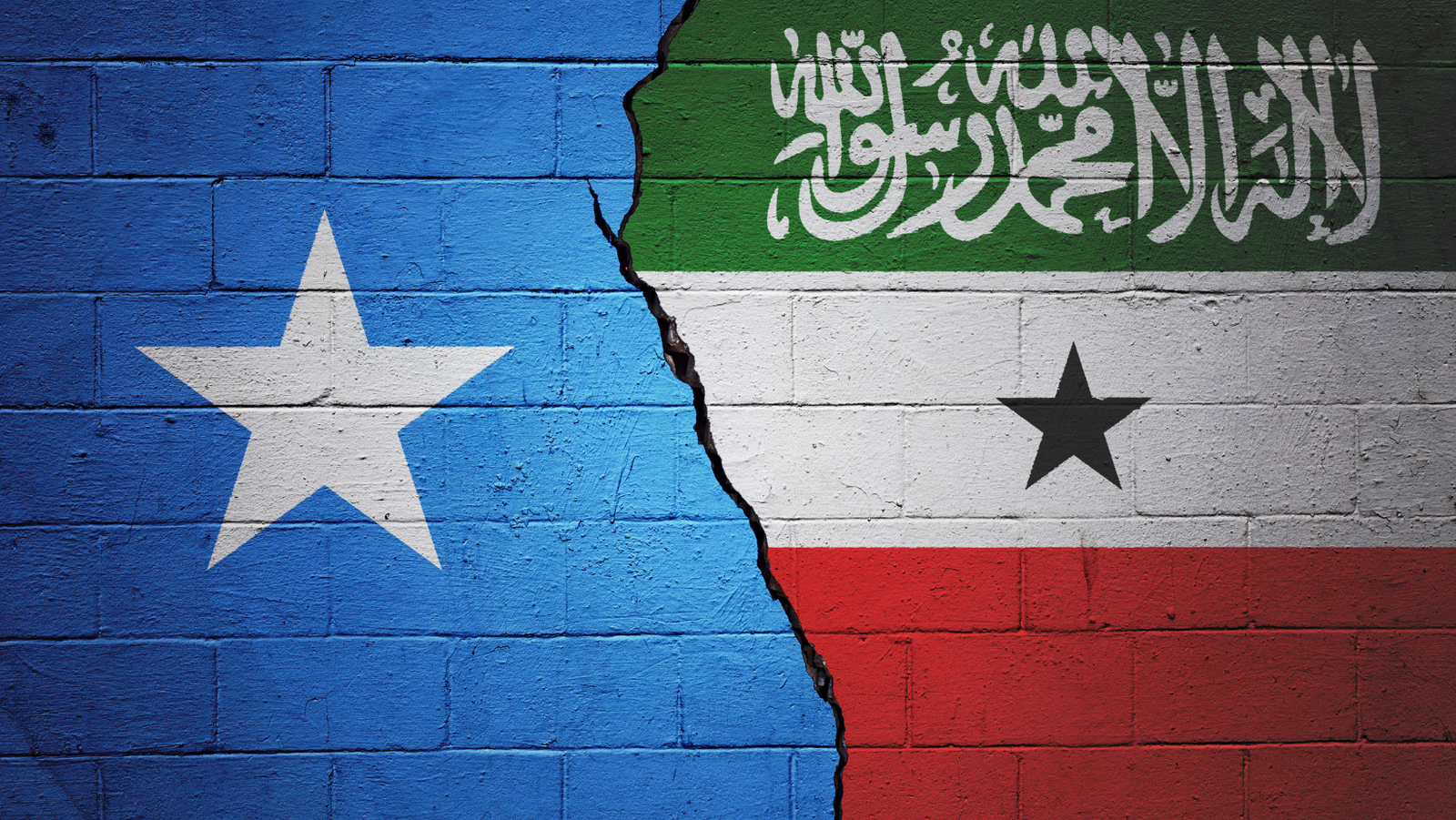
The Horn of Africa has rapidly transitioned from a peripheral maritime flank into a primary battleground for Middle Eastern proxy competition. The core of this friction lies in a concerted attempt by specific actors to embed a structural divide within the region by weaponising Somaliland’s separatist ambitions. This strategy of fragmentation threatens to destabilise the entire Red Sea corridor. At the centre of this geopolitical storm is the undeniable and widening rift between Saudi Arabia and the United Arab Emirates. While Riyadh seeks structural stability to secure its maritime trade routes, Abu Dhabi has increasingly opted for a highly disruptive foreign policy, cultivating relationships with non-state actors and separatist entities to project unilateral naval dominance.
The Catalyst and the Islamic World’s Rejection
The catalyst for this severe diplomatic rupture was the highly controversial Ethiopia-Somaliland Memorandum of Understanding, which was dramatically compounded by the profoundly disruptive decision by Israel in late 2025 to formally recognise the breakaway region. This blatant disregard for Somalian sovereignty triggered an immediate, unified, and categorical rejection from the broader Islamic world. The Organisation of Islamic Cooperation, the Arab League, and the African Union issued swift condemnations. The consensus among the global Muslim community is absolute. Validating such separatism not only violates international law but deliberately threatens the structural integrity of fragile states across the Global South.
The Fracturing Gulf Alliance and UAE Ambiguity
This crisis has violently exposed the limits of traditional Gulf alliances. While Saudi Arabia views the territorial cohesion of Somalia as an absolute prerequisite for security in the Gulf of Aden, the UAE has maintained a calculated and highly destabilising ambiguity. Driven by massive commercial investments in the Berbera port and a desire to establish autonomous logistical hubs, Abu Dhabi has quietly facilitated the separatist agenda. By actively aligning itself with Ethiopian maritime expansionism and Israeli geopolitical manoeuvring in the region, the UAE has severely alienated the central government in Mogadishu, leading to the categorical cancellation of bilateral security and port agreements.
This divergence has birthed a highly dangerous dynamic that analysts increasingly term an axis of fragmentation. This framework relies on wealthy states leveraging breakaway republics to secure strategic chokepoints without the consent of internationally recognised governments. In stark contrast, Saudi Arabia has successfully consolidated a powerful counter-bloc to this growing divide. Riyadh has drawn steadfast and vocal support from Egypt, Turkiye, Qatar, and Pakistan, collectively known as the R4. This consensus recognises that the balkanisation of the Horn of Africa will inevitably invite chaotic proxy wars directly onto the shores of the Red Sea, thereby endangering the economic lifelines of the entire Islamic World.
Pakistan’s Principled Stance
Pakistan’s stance in this geopolitical situation is one worthy of note. As a primary security ally for the Arabian Peninsula, Pakistan’s geopolitical orientation naturally and firmly aligns with this Saudi-led consensus. Islamabad has consistently championed the sovereignty and territorial integrity of brotherly Muslim nations, vehemently rejecting the balkanisation tactics frequently employed by external powers. Supporting the fracturing of a fellow Muslim state sets a perilous precedent that Pakistan, mindful of its own complex border dynamics, simply cannot endorse. By standing resolutely with Mogadishu and condemning the external sponsors of Somaliland’s separatism, Pakistan reinforces its absolute commitment to international law. Islamabad understands that rogue separatist movements must never be weaponised by well-funded states to monopolise global trade chokepoints.
Strategic Outlook
The preservation of Somalia’s territorial integrity requires a coordinated, multi-layered strategic response from the Saudi-led sovereign consensus to ensure permanent stability across the Red Sea and the Gulf of Aden. Regional heavyweights like Riyadh, Cairo, and Ankara must systematically counter the unilateral adventurism of the United Arab Emirates and its external partners, ensuring that vital global trade corridors are not subjected to proxy fragmentation. By providing collective diplomatic shielding, robust maritime policing, and targeted counter-terrorism capacity building to the legitimate government in Mogadishu, the broader Islamic world can effectively neutralise the destabilising ambitions of breakaway entities. Ultimately, holding a firm line against the balkanisation of the Horn of Africa will dismantle the ongoing attempts to embed a permanent divide within the Gulf, establishing a powerful precedent where state independence remains completely non-negotiable.