An unprecedented ideological and administrative purge is unfolding across Indian-occupied Kashmir, threatening the foundations of intellectual autonomy and historical preservation. Recent data tabled in the Jammu and Kashmir Assembly reveals that authorities have scrutinized a staggering 2,181,582 books and publications across college libraries, public repositories, and educational institutions. Under the official guise of eliminating objectionable, anti-national, and secessionist material, the state has already pulled 4,812 books from active circulation, including 518 copies of formally banned titles, while forwarding another 1,752 texts for intense, multi-tiered expert evaluation.
This sweeping state-driven campaign represents a profound escalation in the systemic control of narratives, transforming academic institutions into restricted echo chambers. By weaponizing administrative mechanisms against texts that challenge official state orthodoxy, the administration is triggering deep alarms over the systematic erasure of historical memory, the criminalization of critical thought, and the blatant violation of freedom of expression in Indian-occupied Kashmir.
The Anatomy of a Mass Literary Purge
The sheer scale of this screening exercise underscores an aggressive, state-managed effort to sanitize and control intellectual life in the region. According to data released by the Higher Education Department, out of the nearly 21.8 lakh publications examined, heavy-handed removals are overwhelmingly concentrated in the Kashmir Valley, accounting for roughly 94% of all withdrawn volumes. This geographic disparity highlights how administrative policing specifically targets the cultural and political sensitivities unique to the Valley.
The ongoing crackdown traces its roots to a sequence of aggressive, escalating state interventions:
- The 2025 Police Crackdown: The operation gathered heavy momentum following widespread police raids on commercial bookstores and public libraries in Srinagar. During these raids, hundreds of volumes were seized under sweeping allegations that they promoted the ideology of banned socio-religious organizations.
- The Home Department Prohibitions: Utilizing strict legal provisions under the Bharatiya Nagarik Suraksha Sanhita (BNSS) and the Bharatiya Nyaya Sanhita (BNS), the J&K Home Department formally declared 25 critical history, political, and human rights books completely forfeited, banning their publication, sale, and distribution.
- The Academic Audits: The process expanded into a total institutional audit following a controversy over school library books featuring profiles of historical political figures. Universities and colleges were subsequently ordered to scrub libraries, digital repositories, research theses, and academic journals of any material deemed factually distorted or unaligned with official state perspectives.
Banning Critical Voices and Rewriting History
The state’s blacklisted archive features a broad cross-section of globally respected scholars, historians, investigative journalists, and human rights defenders. Prohibited titles include works by internationally acclaimed writers such as Arundhati Roy, A.G. Noorani, Sumantra Bose, Christopher Snedden, Iftikhar Gilani, Hafsa Kanjwal, and Ather Zia.
Books investigating military operations, regional autonomy, historical plebiscites, and socio-political dissent have been labeled as psychological tools designed to “glorify terrorism” or “cultivate a false sense of victimhood.” By purging these titles, authorities are effectively criminalizing critical discourse. They are actively cutting off generations of students from independent research, alternative historiographies, and comparative political analysis, replacing objective historical inquiry with a monolithic, state-sanctioned narrative.
Violation of Freedom of Expression and Public Backlash
The purge has drawn sharp condemnation from regional political figures, civil society organizations, and academic circles, who view it as an aggressive, authoritarian assault on fundamental human rights.
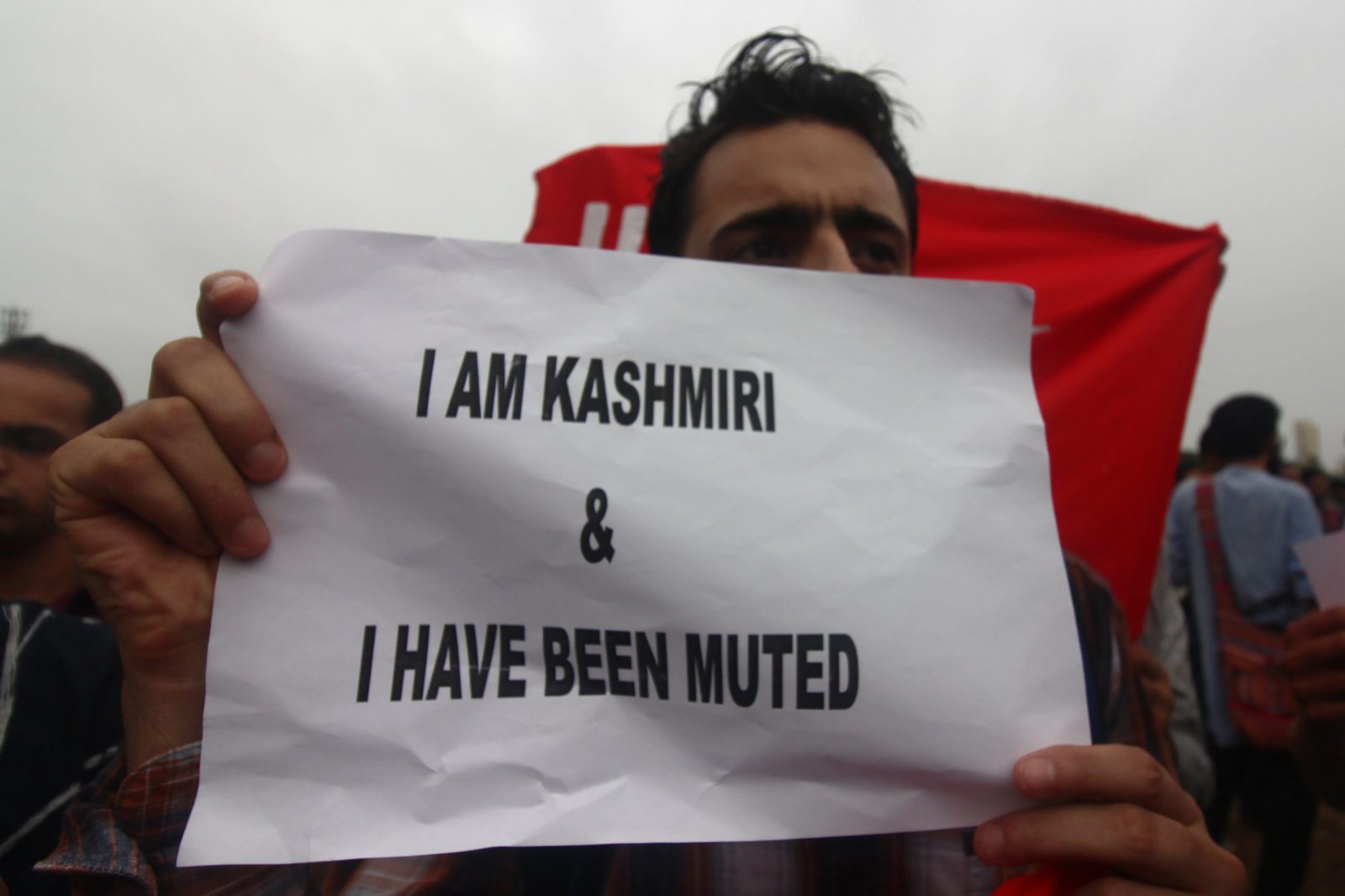
- The Stifling of Dissent: Independent legislators, such as Langate MLA Sheikh Khursheed Ahmad, fiercely criticized the exercise in the assembly, openly questioning whether the administration intends to engineer a bookless society in Kashmir. Critics argue that deliberately targeting literature addressing the core political dimensions of the Kashmir dispute acts as a direct attack on freedom of speech and expression, which are heavily protected under universal human rights frameworks.
- The Pervasive Chilling Effect: Educationists, university professors, and human rights observers warn that these sweeping, intrusive audits create a deeply toxic and pervasive chilling effect. Educators, researchers, and students now routinely exercise intense self-censorship, terrified that reading, citing, or possessing independent sociological and historical texts could invite severe state surveillance, institutional harassment, or legal reprisal under draconian anti-terror and security laws.
Epistemic Surveillance
Beyond the physical clearing of bookshelves, the systematic audits have deeply institutionalized a permanent architecture of state surveillance within higher education. Official administrative directives mandate that institutional heads, including university registrars, deans, and college principals, face direct disciplinary and career-ending penalties should any objectionable material be discovered within their jurisdictions. This strategic devolution of state authority effectively co-opts the professoriate, turning educators into reluctant internal censors out of professional self-preservation. By compelling faculty and administrators to police physical libraries, digital archives, thesis repositories, and academic periodicals on a continuous basis, the regime ensures that intellectual non-compliance carries immediate, severe consequences. This bureaucratic policing effectively strips academic institutions of their historic function as safe harbors for critical inquiry, replacing scholarly autonomy with an internalized regime of preemptive self-censorship.
The Struggle for Press Freedom in Kashmir
Erasure of history is paired with brutal crackdown on history being written by journalists in its present times. The erased written material includes journalistic records. The landscape of journalism in Indian-administered Jammu and Kashmir has undergone a further drastic transformation in recent years, with press freedom watchdogs and human rights organizations warning of a systematic campaign to stifle independent reporting.
Following the revocation of the region’s semi-autonomous status under Article 370 in August 2019, state authorities implemented a stringent media framework aimed at regulating the press. Local reporters, photojournalists, and independent news outlets increasingly face institutional pressures, security agency interrogations, and criminal prosecution under stringent security and anti-terror laws, such as the Unlawful Activities Prevention Act (UAPA) and the Public Safety Act (PSA). High-profile arrests of editors and reporters have created a pervasive chill across newsrooms.
The tactics used to curb independent journalism include:
- Legal Actions & Prolonged Detentions: Journalists are regularly summoned by police for routine reporting on human rights issues, civil protests, or security operations, often accused of publishing “anti-national” content or inciting public unrest.
- Institutional Closures & Raids: Key independent spaces, including the Kashmir Press Club, which served as a crucial hub for local media professionals, were shut down by authorities. Raids on local news outlets and the cancellation of state government advertising have financially crippled independent publications.
- Travel Bans & Passports Withheld: Several Kashmiri journalists attempting to travel internationally for assignments, fellowships, or award ceremonies have been stopped at airports or had their passports revoked without clear official explanations.
- Information Blackouts & Digital Censorship: Digital news sites have faced sudden blocks, while frequent internet shutdowns, historically weaponized during heightened political events, restrict the flow of timely and verified news from the ground.
These measures have forced many journalists into self-censorship to avoid detention or loss of livelihood. International rights groups, including the Committee to Protect Journalists (CPJ), Reporters Without Borders (RSF), and Amnesty International, consistently appeal for an end to the intimidation of the press and call for the release of detained media workers.
Indian authorities maintain that these policies and security measures are essential for national security, maintaining public order, and countering militancy and online propaganda. However, press freedom advocates argue that equating critical journalism with anti-state activity deprives the region, and the global community, of reliable, independent reporting from one of the world’s most sensitive conflict zones.
The Threat to Intellectual Freedom
The systematic oppression of journalistic voices and eradication of thousands of books in Indian-occupied Kashmir is far more than a routine administrative cleanup or a benign regulatory update. It is a calculated, strategic campaign to erase history, silence alternative perspectives, and monopolize collective memory. By criminalizing independent scholarship and policing intellectual discourse, authorities are dismantling the foundational pillars of critical thinking and academic freedom. This aggressive narrowing of the intellectual landscape ensures that future generations are denied access to pluralistic viewpoints, ultimately locking the region into a state-mandated echo chamber where dissent is completely erased and historical truth is rewritten by government decree.
[Image Credit: Amnesty International]
Abid Wani is a political commentator and activist from Indian-occupied Kashmir, writing on human rights, self-determination, and the politics of historical memory in the region. He is a vocal critic of state censorship and the erosion of civil liberties in Jammu and Kashmir, and is currently pursuing his PhD in Law at the International Islamic University Malaysia (IIUM), where his research touches on international law and protracted conflict.