
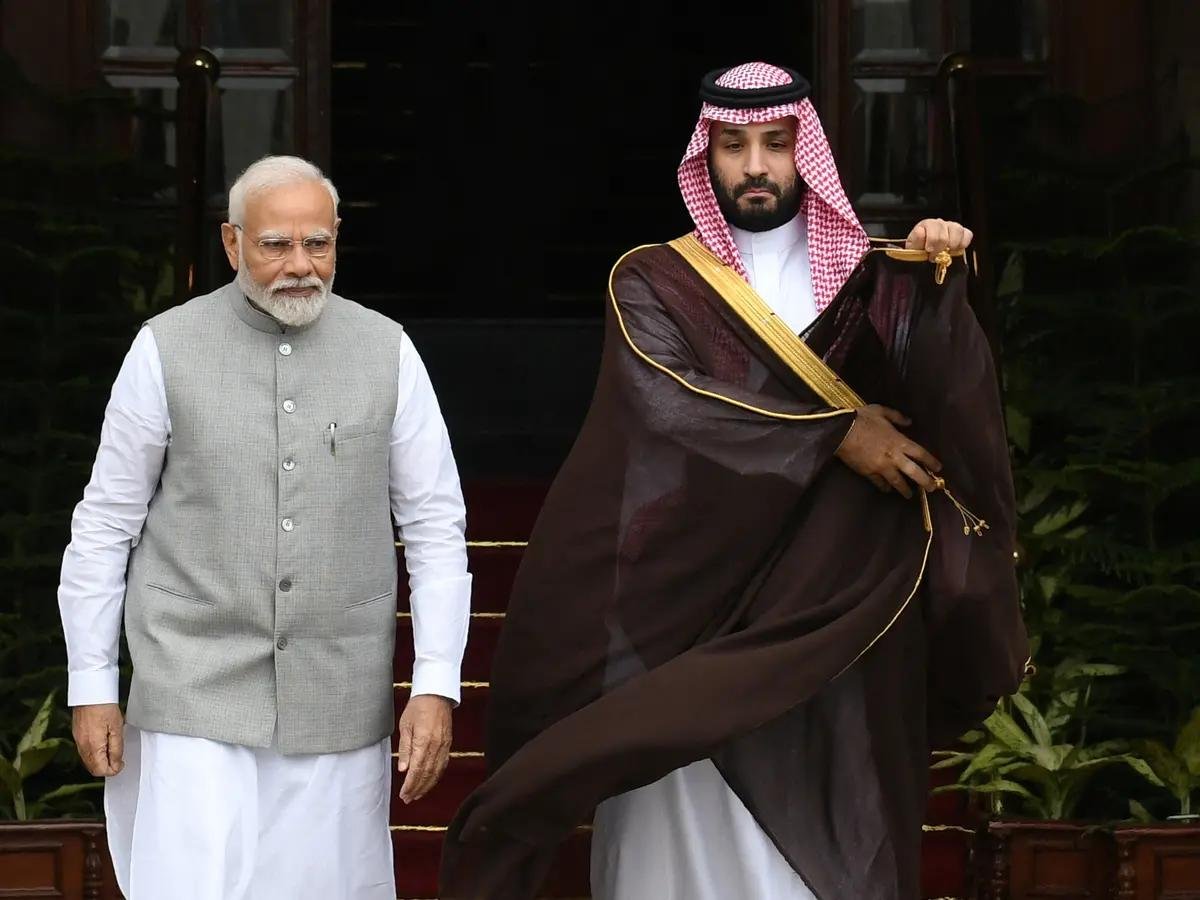
The formalisation of the Makkah Joint Defence Agreement on 7 August 2026 marks a pivotal structural shift in the security architecture of West Asia and South Asia. Signed in the holy city of Makkah by Saudi Crown Prince Mohammed bin Salman, Turkish President Recep Tayyip Erdogan, and Pakistani Prime Minister Shehbaz Sharif, the trilateral security arrangement introduces a binding collective deterrence framework that considers an armed attack against any one of the three states as an attack against all, and importantly it appears to encompass armed attacks from non-state actors and proxy networks. Whilst the primary geopolitical motivation for Riyadh and Ankara stems from escalating Middle Eastern conflicts, the integration of Islamabad into a formalised mutual defence network creates severe strategic headwinds for New Delhi. Set against the backdrop of sustained hostile relations between India and Pakistan, this trilateral pact fundamentally complicates Indian military planning, alters regional power balances, and challenges New Delhi’s diplomatic investments in the Gulf.
The Complementary Assets of the Triad
The strategic utility of this new triangular axis lies in the distinct, highly complementary assets brought by each signatory. Saudi Arabia contributes unparalleled financial capital, diplomatic weight, and its role as the dominant economic anchor of the Gulf Cooperation Council. Turkey provides a rapidly expanding, battle-tested military-industrial base capable of delivering advanced uncrewed aerial systems, naval platforms, and state-of-the-art electronic warfare suites. Pakistan contributes the operational expertise of its massive standing army, thousands of personnel deployed on the ground in the Arabian Peninsula, and the strategic weight of being the Muslim world’s only nuclear-armed state. For Islamabad, the agreement represents a major diplomatic triumph that effectively insulates its defence modernisation from severe domestic economic constraints whilst embedding its armed forces into a broader regional defence umbrella.
The Turkish Arms Pipeline: A Direct Threat to Indian Superiority
From the perspective of Indian defence planners, the most immediate threat posed by the Makkah Pact is the rapid acceleration of technology transfers from Ankara to Islamabad. Over the past decade, Indian strategic doctrine has relied on maintaining a clear conventional superiority over Pakistan across the land, air, and maritime domains that had significantly enhanced its strategic importance in the Middle East. India maintained this aura of defence, economic and diplomatic superiority over Pakistan until Pakistan proved its strength in the battlefield in response to India’s attack on Pakistan in 2025, when India suffered heavy losses and Pakistan walked out of the battlefield victorious against a power three times larger than its mass. In a war that concluded in four days, seven Indian jets were shot down by Pakistan’s Air Force with no aircraft lost on the Pakistani side. Victorious Pakistan left the world in awe over its defence might, which had not been displayed in such a manner before the India-Pakistan War of 2025, redefining Pakistan’s position not only in the region, but on the globe.
Turkey’s defence sector has demonstrated exceptional capabilities in uncrewed combat aerial vehicles, autonomous systems, and counter-drone warfare, as seen in recent regional conflicts. Türkiye has rapidly transformed its defence sector into a major global military manufacturing and export powerhouse, cutting reliance on foreign suppliers and nearing the world’s top ten defence exporters with multi-billion-dollar annual sales. A direct, institutionalised corridor for Turkish defence exports to Pakistan threatens to narrow India’s conventional military edge along the Line of Control and the International Border. This military-technical integration allows Pakistan to acquire sophisticated airborne radar platforms, precision-guided munitions, and electronic countermeasures at subsidised costs funded through Saudi financial lines, undermining New Delhi’s defensive posture without requiring Pakistan to overextend its fragile national budget.
The Collapse of India’s Gulf Strategy
This strategic rupture effectively undermines years of painstaking Indian investments aimed at building a robust bilateral defence partnership with Saudi Arabia. Driven by a desire to secure its maritime supply lines through critical chokepoints such as the Strait of Hormuz and the Bab el-Mandeb Strait, New Delhi had systematically cultivated deep military-to-military ties with Riyadh. These efforts culminated in landmark initiatives such as the historic Al-Mohed Al-Hindi joint naval exercises, joint security dialogues, and enhanced maritime domain awareness protocols designed to protect regional energy corridors. India’s strategic calculation was rooted in the belief that strong naval cooperation with Saudi Arabia would secure Indian commercial shipping passing through West Asian sea lines of communication whilst gradually neutralising Pakistan’s historical influence in the Kingdom. However, by binding its national security to a formal collective defence pact with Pakistan and Turkey, Saudi Arabia has effectively rendered India’s security investments subordinate to Riyadh’s foundational military alliance with Islamabad. The operational access and strategic goodwill India sought to cultivate near Hormuz and Mandeb are now severely compromised, as Saudi Arabia’s primary security guarantees are explicitly pledged to India’s chief adversary, demonstrating that New Delhi’s maritime diplomacy could not overcome the deep-seated ideological and military ties linking Riyadh to Pakistan.
Beyond conventional military hardware and lost diplomatic capital, the collective defence clause creates dangerous operational ambiguity for Indian force projection along its western front. The inclusion of an explicit collective defence mandate introduces strategic uncertainty regarding how Riyadh or Ankara might respond to a bilateral military crisis between India and Pakistan. Even if the likelihood of direct military intervention by Saudi Arabia or Turkey in a South Asian conflict remains low, the mere presence of joint security commitments obligates Indian intelligence and military staff to factor potential third-party logistical, intelligence, or political interventions into their crisis management frameworks.
The treaty also presents a complex diplomatic dilemma for India’s West Asia strategy. Over the preceding decade, New Delhi executed a highly successful diplomatic campaign to deepen security, energy, and investment ties with the Gulf monarchies, particularly Saudi Arabia and the United Arab Emirates. India positioned itself as a reliable economic partner and a major consumer of Saudi crude oil, leading many analysts to believe Riyadh was decoupling its economic relationship with India from its traditional security alliance with Pakistan. The signing of the Makkah Pact demonstrates that whilst Saudi Arabia values its multi-billion-dollar commercial ties with New Delhi, its core security architecture remains firmly anchored to Islamabad’s military capabilities during periods of regional crisis. This reality limits the strategic depth of India’s Gulf outreach, forcing New Delhi to acknowledge that financial diplomacy cannot completely dismantle the ideological and military bonds between Muslim defence establishments.
Pakistan’s Strategic Windfall
From Pakistan’s strategic perspective, the Makkah Joint Defence Agreement offers an unprecedented framework to extract maximum defensive and economic leverage specifically tailored to counterbalance India and its proxy network operating in the region. Economically, integrating its security posture with Saudi Arabia enables Islamabad to secure preferential energy supply terms, balance-of-payments support, and direct Gulf investments, effectively insulating its fragile economy from the financial strain of maintaining conventional parity with New Delhi. On the defensive front, the pact allows Pakistan to upgrade its military hardware through co-production agreements and technology transfers with Turkey’s advanced defence sector, funded or subsidised by Saudi capital. This enables the Pakistani armed forces to acquire high-tier uncrewed aerial systems, naval combatants, and electronic warfare infrastructure without incurring ruinous state debt. By embedding its conventional deterrence within a broader trilateral alliance that includes NATO-standard Turkish military technology and Saudi diplomatic weight, Islamabad gains significant strategic depth along its western flank. Consequently, Pakistan can offset India’s superior defence budget and conventional military scale whilst shifting the burden of regional deterrence onto a collective security framework, thereby bolstering its strategic leverage against Indian military doctrine.
Aisha Ghazi is a human rights lawyer, author, and documentary filmmaker dedicated to uncovering untold histories. Her work focuses on war and conflict, socio-psychological grounds dictating violence, refugee crisis, geopolitics and history. She is the director of iResist, a human rights platform that advocates human rights through documentary, and a Solicitor of the Supreme Court of England and Wales.