The evolving security dynamics along the Durand Line require a highly calibrated and analytical response to the increasingly hostile posture adopted by the interim administration in Kabul. The recent surge in cross-border militant violence, dramatically underscored by the June 2026 assault on a paramilitary Rangers compound in Karachi, Pakistan, reveals a dangerous escalation in state-tolerated proxy warfare. Coupled with incendiary rhetoric from Afghan cabinet ministers threatening Pakistani territory, it is evident that the Taliban leadership is actively utilizing an irredentist narrative to navigate its own internal crises.
The Mechanics of Cross-Border Escalation
The Karachi attack, claimed by the Jamaat-ul-Ahrar faction of the Tehreek-e-Taliban Pakistan, highlighted the sophisticated logistical networks connecting Afghan sanctuaries to Pakistan’s urban centres. Investigations revealing that the heavily armed assailants crossed the border merely days before striking the port city confirm that militant safe havens remain fully operational within Afghan territory. This reality fundamentally contradicts the Taliban’s repeated diplomatic assurances that Afghan soil will not be used to launch attacks against neighbouring states. The persistence of these terror nodes indicates either a severe lack of capacity within the Kabul administration to control its territory or, more concerningly, a deliberate policy of strategic enablement.
Domestic Diversion and the Irredentist Narrative
From a geopolitical perspective, the Afghan administration’s reliance on expansionist rhetoric and anti-Pakistan sentiment appears highly calculated. Facing profound economic collapse, complete diplomatic isolation, and growing internal dissent regarding governance failures, the Taliban leadership requires an external adversary to maintain factional cohesion. By reviving the historically bankrupt concept of a “Loy Afghanistan” (Greater Afghanistan) and challenging the internationally recognised border, Kabul attempts to construct a unifying nationalist narrative. This irredentist posturing is less about genuine territorial expansion and more a mechanism for deflecting domestic frustration outward.
Kinetic Retaliation and Border Fortification
In response to this structural threat, Pakistan has adopted a legally sound and militarily decisive posture. The retaliatory precision airstrikes conducted by Pakistani security forces against militant hideouts in the Afghan provinces of Paktia, Paktika, and Kunar demonstrate a necessary shift in the rules of engagement. By directly targeting the command and control infrastructure of anti-state groups across the border, Islamabad has established a clear deterrent threshold. These kinetic operations are a standard, internationally recognised state response to persistent cross-border terrorism when the host government fails to fulfill its counter-terrorism obligations.
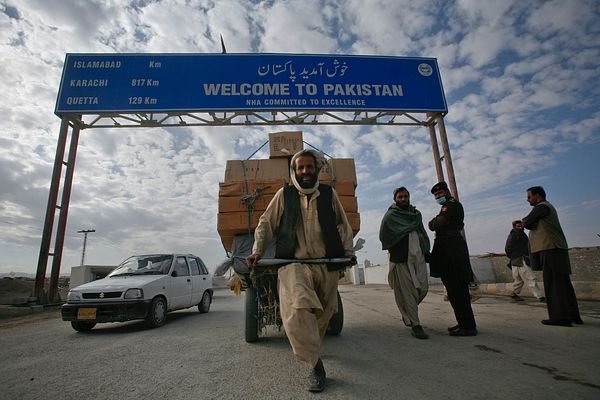
Simultaneously, Pakistan has accelerated its internal security protocols to mitigate the spill over effects of Afghan instability. The comprehensive deportation policy targeting illegal foreign nationals, alongside the rigorous physical and electronic fortification of the western border, represents a necessary assertion of state borders and independence. While these measures have drawn criticism from Kabul and it’s biggest regional ally, India, they are essential administrative actions designed to sever the logistical and financial pipelines that sustain militant networks operating within Pakistan’s urban and tribal regions.
The Limits of Strategic Patience
The persistent cycle of violence demonstrates the inherent limitations of relying on negotiated settlements with an administration that views militant proxies as strategic assets. Multiple rounds of internationally mediated dialogue have failed to yield a lasting cessation of hostilities. Consequently, Pakistan must acknowledge that its historical policy of strategic patience has yielded diminishing returns. A sustainable security environment requires an approach that imposes tangible, unsustainable costs on the enablers of regional terrorism.
To achieve this, Pakistan must supplement its military deterrence with a sophisticated economic and diplomatic strategy. This involves tightly regulating transit trade privileges, enforcing strict customs controls to prevent smuggling, and actively working with regional partners to ensure that Kabul remains diplomatically isolated until it demonstrably dismantles terror sanctuaries. Financial asphyxiation of the illicit networks that empower these militant groups is a critical prerequisite for regional stability.
Strategic Outlook:
Pakistan should maintain a robust, intelligence-led kinetic posture along its western border, authorising targeted strikes against terror infrastructure whenever sovereign security dictates. However, military pressure alone is insufficient. Islamabad must ruthlessly implement a comprehensive economic and diplomatic quarantine, heavily conditioning all bilateral trade and regional engagement upon Kabul’s verifiable eradication of proxy terror networks. Regional stability depends entirely on compelling the Afghan administration to abandon its irredentist posturing, adhere to established international norms and rebuild it’s relationship with it’s neighbour.
[Image Credit: The Diplomat]