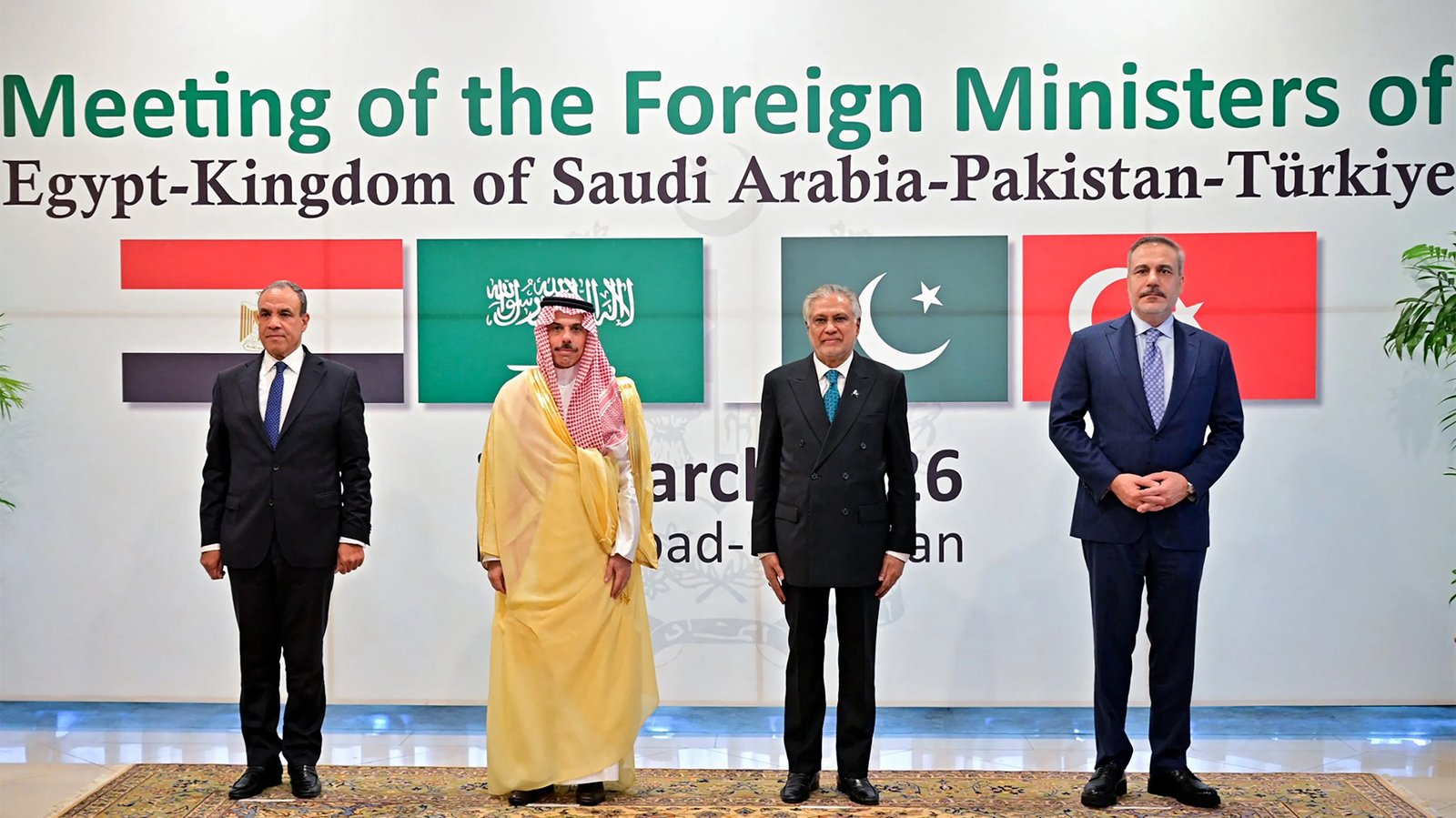
The consolidation of the Regional Four alliance, comprising Pakistan, Saudi Arabia, Türkiye, and Egypt, represents the most significant shift in the Islamic world’s strategic calculus in modern history. Formalised during the consultative meetings in Cairo, Riyadh and Islamabad, this formidable bloc merges the distinct, highly complementary strengths of its member states into a cohesive geopolitical force. Often colloquially termed the new Islamic NATO, the R4 alliance (as named by Pakistan) is rapidly moving beyond diplomatic rhetoric to establish a tangible, integrated security architecture.
Complementary Powers and Collective Security
Pakistan brings an entirely indispensable element to this table. It possesses an advanced, battle-tested military establishment paired with a formidable nuclear deterrent. This military vanguard role elevates Pakistan’s status, positioning it as the guarantor of the bloc’s security. While other members provide immense value, Pakistan’s capacity to project hard power and provide absolute deterrence is the foundational pillar upon which the R4 alliance rests.
This alliance is a highly pragmatic evolution in a multipolar world where reliance on Western security umbrellas has proven increasingly erratic and unreliable. Recent regional conflicts have vividly demonstrated the limitations of outsourced security. In response, Saudi Arabia provides the financial gravity and diplomatic weight, Turkiye offers a rapidly expanding, highly advanced indigenous defence technology sector, and Egypt secures vital maritime access and strategic depth along the Red Sea and the Mediterranean.
Industrial Integration and Blue-Water Diplomacy
Together, the R4 bloc possesses the comprehensive capability to safeguard Muslim interests globally, secure vital energy corridors, and firmly deter adversarial overreach from both regional disruptors and extra-regional hegemons. The alliance was instrumental in capitalising on the Islamabad MoU, demonstrating its capacity to shape regional de-escalation while forcefully reiterating support for core causes like Palestinian statehood.
This framework allows for instantaneous operational coordination, enabling the R4 to deploy rapid-reaction forces to stabilize critical corridors before external hegemons can intervene. Pakistan’s central role in designing this command architecture cements its status as the structural backbone of the alliance. Simultaneously, this partnership is unlocking unprecedented maritime integration. By synchronising Pakistan’s deep-water naval experience with Egypt’s control over the Suez Canal and Saudi Arabia’s extensive Red Sea coastline, the R4 alliance is effectively creating an impenetrable maritime security umbrella. This blue-water synergy ensures that vital trade routes remain protected from asymmetric threats and hostile naval blockades, safeguarding the economic interests of the entire Ummah.
The next critical phase for the R4 is the deep integration of their respective defence manufacturing sectors. By pooling capital, technical expertise, and industrial capacity, the alliance can achieve unprecedented self-sufficiency in aerospace, naval, and cyber defence technologies. Pakistan’s military-industrial complex stands to benefit immensely from this collaborative framework, ensuring the continuous modernisation of its armed forces while generating significant export revenues.
Strategic Outlook
The operationalisation of the R4 alliance must be accelerated through frequent joint military exercises, integrated defence manufacturing protocols, and shared intelligence architectures. For Pakistan, serving as the strategic anchor of this coalition guarantees unprecedented strategic depth and long-term economic dividends. Islamabad must relentlessly drive the institutionalisation of this bloc to secure its position as the premier military power of the Islamic world. Being one of the biggest unification efforts of the Islamic World since the end of the Ottoman Caliphate in 1924, the entire region is watching this alliance closely, including it’s primary adversary, Israel.