Pakistan’s greatest economic strength may not lie beneath its soil, but in the soil itself. From the irrigated plains of Punjab and Sindh to the fruit belts of Khyber Pakhtunkhwa and Balochistan, the mountain valleys of Gilgit-Baltistan and the Arabian Sea coast, Pakistan can produce temperate, subtropical and tropical crops; grain, fruit, fibre, livestock, seafood and high-value horticulture within one national territory.
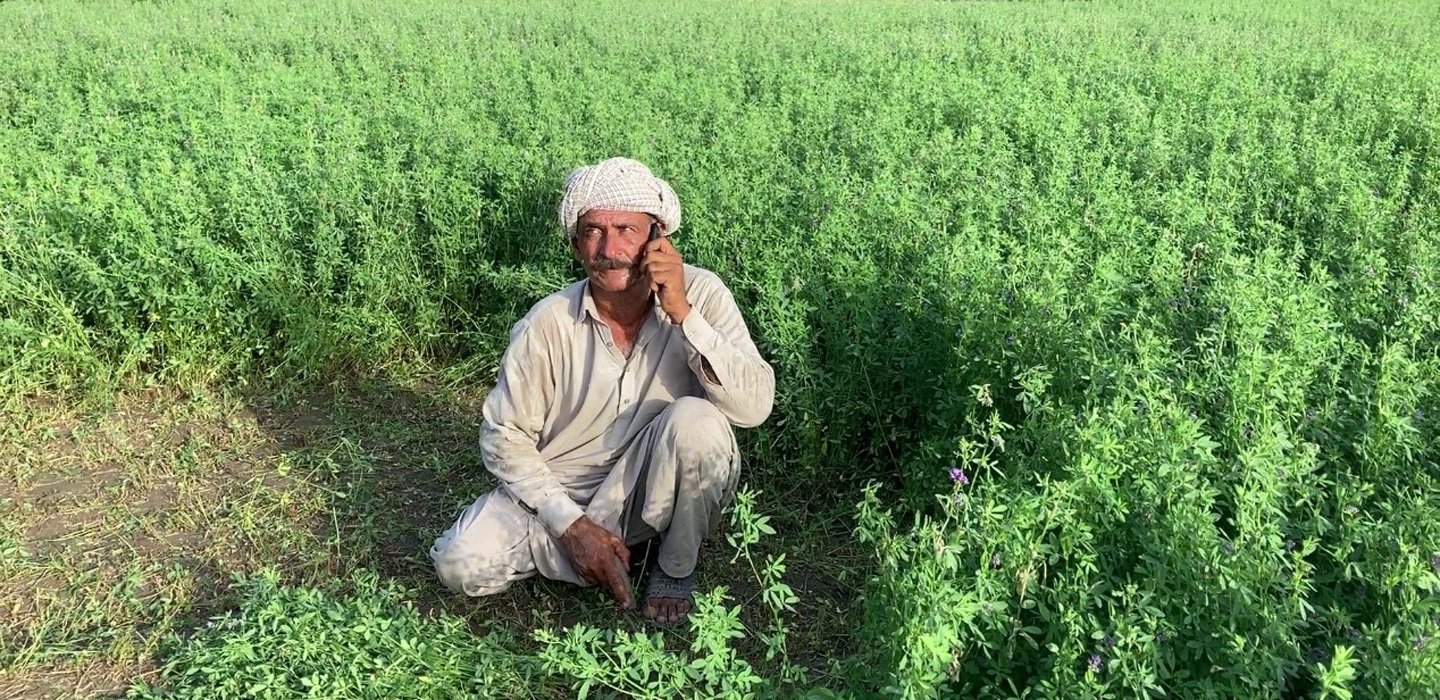
This is not simply romantic language about an “agricultural country.” Agriculture contributes approximately 23.4 per cent of GDP and 33.1 per cent of national employment. Of 77.2 million employed people, roughly 25.5 million work directly in agriculture under the latest statistical definition. This excludes about 2.5 million subsistence agricultural workers no longer classified as employed. The number economically dependent on agriculture is therefore larger. Livestock involves more than eight million rural families, whilst poultry employs over 1.5 million people. Millions more work beyond the farm gate in ginning, textiles, sugar, flour and rice milling, dairy, meat, leather, edible oils, feed, cold storage, transport, retail and export logistics. Pakistan publishes no reliable, unduplicated total for this wider workforce; what can safely be said is that agriculture directly employs one-third of workers and indirectly sustains a much larger share of households and industry. (Pakistan Economic Survey 2025-26; Labour Force Survey 2024-25)
Land, Water and Production
Pakistan has approximately 30.5 million hectares, about 75 million acres, of agricultural land, nearly 47 per cent of its reported land area under the FAO definition. This includes arable land, permanent crops and pasture, so it is not all cropped annually. More than 82 per cent of cultivated land is irrigated and about 18 per cent rainfed. Its exceptional advantage is the concentration of fertile alluvial soils within one of the world’s great contiguous irrigation systems. (FAO: Pakistan at a Glance)
The Indus Basin supports the Kharif and Rabi seasons and, in many areas, multiple cropping. Surface-water availability in 2025-26 was about 92 million acre-feet, 60.6 MAF in Kharif and 31.4 MAF in Rabi. Yet water is finite. Future strength must be measured in output per acre and per unit of water, not indiscriminate expansion of thirsty crops.
Pakistan already operates at enormous scale. Provisional 2025-26 production included 29.61 million tonnes of wheat, 9.99 million tonnes of rice, 89.45 million tonnes of sugarcane, 8.79 million tonnes of maize, 12.78 million tonnes of potatoes, 2.69 million tonnes of onions, 236,000 tonnes of chillies and 7.05 million cotton bales. Gross milk production was estimated at 74.69 million tonnes, with 60.19 million tonnes available for human consumption, alongside 6.31 million tonnes of meat and more than 28 billion eggs. (Pakistan Economic Survey 2025-26)
These figures reflect both consumption and export capacity. Wheat is overwhelmingly absorbed at home; rice provides a structural export surplus. Milk and livestock serve huge domestic markets, but weak collection, chilling, traceability and processing restrict high-value exports. Cotton sustains Pakistan’s largest manufacturing and export ecosystem.
There is no scientifically meaningful single figure for “total agricultural consumption”: wheat, milk, meat, cotton, sugarcane and fruit use different measurements and supply chains. The correct assessment is commodity by commodity, production, seed and feed, processing, losses, household consumption, stocks, imports and exports. Pakistan is broadly self-producing in wheat, surplus-producing in rice, immense but under-processed in livestock and milk, yet critically import-dependent in edible oil. Domestic production met only about 10 per cent of edible-oil requirements in 2025-26; July-March oil and oilseed imports cost approximately US$4.55 billion. Expanding canola, sunflower, mustard, sesame and other suitable oilseeds could conserve foreign exchange and diversify farm incomes.
Agriculture, Industry and Exports
Pakistan exported approximately US$8.02 billion in agro-food products in 2023-24, but food alone understates agriculture’s contribution. Cotton textiles and clothing are the largest export group, whilst leather, animal casings, wool, hides, tobacco and processed foods are also agricultural in origin. In July-December 2024, textiles comprised about 52.3 per cent of merchandise exports and food another 15 per cent. Agriculture therefore supplies not only what Pakistan eats, but much of what it sells globally. (TDAP Agro and Food Division; PBS Quarterly Review of Foreign Trade)
The strategic objective must be to move from produce to products. Raw cotton, mangoes, chillies and milk earn less than branded garments, frozen pulp, aseptic purée, sauces, spice blends, cheese, milk powder, nutraceuticals and certified meat.
Key Opportunities by Commodity
Pakistan’s strongest established and emerging opportunities include:
- Rice: Premium Basmati offers aroma, distinctive grain and geographic identity; high-yield non-Basmati varieties serve large price-sensitive markets. Branding, traceability, residue control and retail packaging can replace low-value bulk trade.
- Cotton and technical fibres: Pakistan possesses a complete farm-to-garment chain. Restoring yield and fibre quality would reduce imports and expand yarn, fabric, apparel, home textiles, medical cotton and technical textiles.
- Mangoes, citrus and dates: Chaunsa, Sindhri and Anwar Ratol mangoes have powerful flavour identities; Kinnow has an established export platform, and Sindh and Balochistan have major date potential. Grading, disease control, packhouses, cold chains, treatment, branding and dependable delivery are essential. Lower grades should become pulp, juice, concentrate, dried fruit, oils and ingredients.
- Livestock, dairy, meat and leather: Livestock produces 62.4 per cent of agricultural value added and about 14.6 per cent of GDP. Cattle, buffalo, sheep and goats can support milk, cheese, butter, powder, halal meat, gelatin, collagen, leather, casings and pet food. Identification, vaccination, disease-free zones, hygienic slaughter, chilling, testing and certification can unlock premium global markets.
- Fisheries and aquaculture: The coast, inland waters and warm climate support marine fish, shrimp, crab and farmed fish. Aquaculture can increase protein without using more cropland if hatcheries, feed, water quality and cold chains meet international standards.
- Potatoes, onions and vegetables: Present volumes justify frozen chips, flakes, starch, dehydrated onion, powders and ready-to-cook products, reducing waste and the boom-and-bust cycle that harms both farmers and consumers.
- Chillies, jalapeños, herbs and spices: Sindh has a red-chilli base, whilst irrigated regions can produce jalapeños and speciality peppers for pickles, sauces and food-service buyers. Coriander, cumin, fennel, turmeric, mint and spice blends offer further potential. Seed integrity, contract farming, pesticide and aflatoxin control, dehydration, brining, sterilisation and processing are decisive; the prize is tested, blended and branded product, not sacks of raw spice.
- Olives and olive products: Potohar and suitable areas of Khyber Pakhtunkhwa and Balochistan can produce table olives, extra-virgin oil, pickles, cosmetics, soap and leaf extracts. Olives cannot replace staples or grow everywhere, but correct zoning can turn marginal or rainfed land into higher-value production and reduce imports.
- Oilseeds and niche crops: Sesame, chickpeas, lentils, canola, mustard and sunflower offer export or import-substitution gains. Targeted clusters can also develop seed production, floriculture, medicinal plants, essential oils, organic produce and climate-suitable nuts. Agro-ecological zoning must place each crop where soil, climate and water create real comparative advantage.
From Potential to a Global Supply Role
Pakistan cannot credibly claim it will “feed the world” merely because it has fertile land. It must first secure affordable nutrition for a population already above 240 million and potentially approaching 400 million around mid-century. Water stress, climate shocks, low yields, post-harvest losses and urbanisation impose hard constraints.
Nevertheless, Pakistan can become a major global food, fibre and agro-industrial supplier, serving the Gulf, Afghanistan, Central Asia, western China, wider Asia and Africa whilst reaching premium markets farther abroad. Its location near food-importing states, access to the Arabian Sea, connections across South, Central and West Asia, climatic diversity and huge domestic market provide scale and strategic reach.
Success requires three simultaneous shifts: improve domestic food security through higher wheat, pulses, oilseed, dairy and water productivity; expand exportable surpluses in rice, meat, seafood, fruit, vegetables and high-value horticulture; and multiply value through textiles, processed foods, dairy products, leather, oils, starches, sauces, spices and branded consumer goods.
Pakistan does not need more slogans. Agriculture must be managed as one national system linking land, water, science, experienced farmers, industry, finance, storage, logistics, trade and diplomacy. Farming is also a practical art: books and technology matter, but neither can replace the accumulated judgement of farmers who understand soil, seasons, water and living crops. Research and policy must therefore work with farmers, not merely issue instructions to them.
Pakistan already possesses the land, irrigation heritage, livestock wealth, climatic range, workforce, domestic demand and access to global trade routes. Few countries begin with so many advantages. The question is not whether Pakistan has agricultural might, it unquestionably does. The question, addressed in the next article, is why this potential remains underused and, in several areas, is being actively eroded.
Policy Recommendations
- Accelerate the National Oilseed Enhancement Programme: The programme exists on paper, with area expansion targets and mini-expeller plans, but implementation remains far short of what is needed. The critical missing elements are guaranteed procurement prices for canola, sunflower, mustard and sesame, and reliable certified seed availability at scale. Without these, area targets will not be met. Funding commitments must be matched by delivery mechanisms that actually reach smallholder farmers rather than remaining as ministry-level planning documents.
- Mandate Cold Chain Infrastructure at District Level: Post-harvest losses across fruits, vegetables, dairy and meat remain among the largest drains on agricultural value in Pakistan, yet no mandated district-level cold storage or refrigerated transport programme exists. The federal and provincial governments should require the construction of publicly subsidised, privately operated cold storage and refrigerated transport hubs at the district level, with priority given to mango, citrus, potato and dairy belts. Without chilling infrastructure, Pakistan will continue to export raw commodities at low prices whilst importing processed equivalents at high ones.
- Ensure Full Rollout of the Pakistan Animal Identification and Traceability System (PAITS): The system was inaugurated in July 2026, but inauguration is not implementation. Mandatory compliance for all commercial livestock operations should be enforced within 24 months, with provincial governments required to integrate PAITS data into disease-free zone certification, halal slaughter verification and export documentation. Without enforcement, the system risks becoming another underutilised registry.
- Create a Dedicated Agro-Processing Industrial Policy: Pakistan has no comprehensive industrial policy specifically designed to incentivise value-added agro-processing. General tariff rationalisation is under way but does not constitute a targeted regime. A dedicated policy should offer tax relief, subsidised energy tariffs and access to long-term finance for enterprises establishing processing capacity in rice milling, fruit pulping, dairy manufacturing, spice blending, oilseed crushing and textile finishing. The objective is to shift export revenues from raw commodities to finished and semi-finished products.
- Move Beyond Abiana Adjustments to a National Volumetric Water Pricing Framework: Punjab has raised Abiana rates and some provinces have begun adjusting water charges, but these are incremental fixes to a fundamentally broken system. What is required is a national volumetric water pricing framework with tubewell metering in water-stressed districts, crop-specific pricing that genuinely disincentivises flood-irrigated rice and sugarcane in arid zones, and a parallel income-support scheme for farmers who transition to drought-tolerant or higher-value alternatives. The IMF has repeatedly recommended this; the government has repeatedly deferred it.
- Expand Pakistan’s Geographical Indication Pipeline and Establish a National Agri-Export Brand: Pakistan has successfully registered Basmati rice, Sindhri mango, Chaunsa mango and Sargodha Kinnow as geographical indications, but Anwar Ratol, Sindhi chillies and dozens of other commodities with strong geographic identities remain unregistered. The GI pipeline must be accelerated, and a dedicated national agri-export branding authority should be established with a globally recognised halal certification mark comparable to Malaysia’s JAKIM. Branding without quality assurance is worthless; quality assurance without branding leaves value on the table.
- Institutionalise Farmer Participation in Research and Policy: Agricultural research institutions and policy bodies in Pakistan operate without formal mechanisms for farmer input. A statutory obligation to include elected farmer representatives on the boards of provincial agricultural universities, the Pakistan Agricultural Research Council and commodity price-support bodies would help ensure that research agendas and policy decisions reflect field realities rather than bureaucratic assumptions.
- Produce and Enforce a National Agro-Ecological Zoning Atlas: Pakistan lacks a legally binding, publicly accessible framework matching crops to soil type, water availability, climate suitability and market access. Producing such an atlas and using it to guide subsidy allocation, irrigation access and development investment would reduce the chronic misallocation of land and water that is currently one of the largest sources of yield underperformance and environmental degradation in the sector.