The global geopolitical architecture is undergoing a profound and necessary reorientation, placing Pakistan at the very centre of a critical identity renaissance. For decades, Islamabad was rigidly and somewhat artificially categorised within the traditional South Asian paradigm. This framing was largely a colonial legacy that ignored the nation’s deep historical, cultural, and geographical arteries. However, the recent institutional redefinitions by international bodies like the World Bank acknowledge a reality that has long been evident to regional observers. Pakistan is naturally converging with the broader Middle East and West Asia, shedding the limiting confines of a purely subcontinental identity.
Civilisational Continuity and Geopolitical Realignment
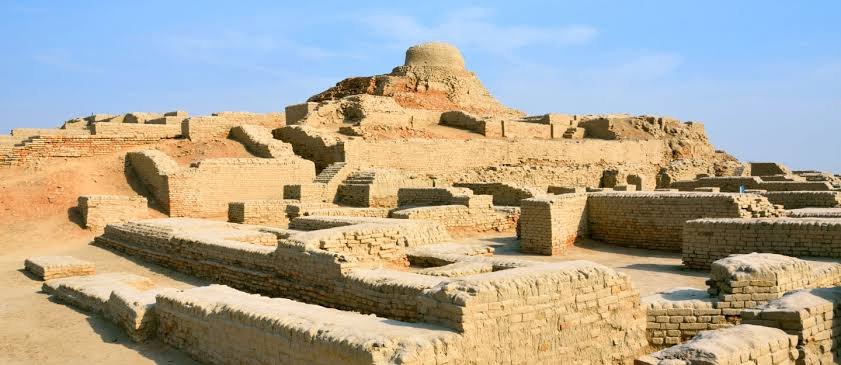
This strategic pivot is intrinsically linked to an increased effort to reclaim the Indus Valley and Harappan civilisation as the foundational bedrock of the Pakistani state. By actively promoting the Harappan heritage, Pakistan highlights its historical status as an ancient, advanced, and independent civilisation that has always been distinct from the overarching Gangetic narratives promoted by New Delhi. The Indus River has historically served as a corridor connecting Central and West Asia to the Arabian Sea, functioning as a cradle of commerce and culture entirely separate from the rest of the Indian subcontinent. Increasing their claim over this distinct historical continuum provides Islamabad with an unassailable sovereign narrative.
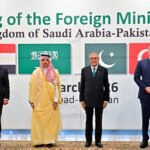
Crucially, this Indus identity perfectly complements Pakistan’s modern geopolitical trajectory. Culturally, economically, and strategically, Islamabad is deepening its integration with the Arab and Islamic world. The traditional reliance on viewing Pakistan solely through the lens of its eastern border is being replaced by a holistic understanding of its western and maritime frontiers. This reorientation aligns perfectly with the strategic visions of Gulf partners who increasingly view Pakistan not as a distant South Asian neighbour, but as an integral component of their own security and economic architecture.
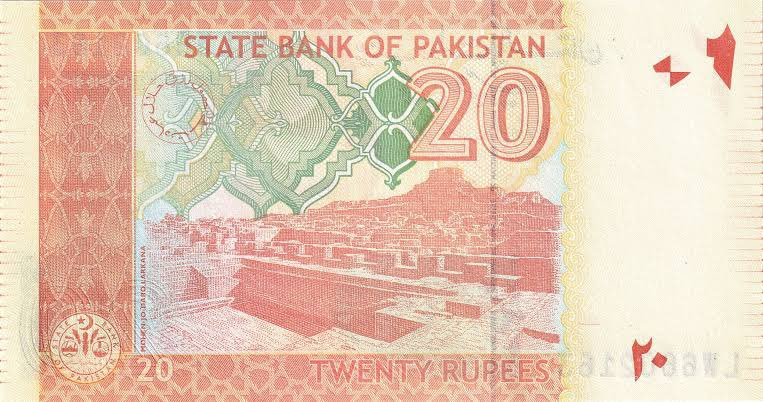
These efforts, however, are not sudden. Since independence, Pakistan has consistently embraced it’s Indus history, with ancient heritage sites featuring on numerous Pakistani banknotes, and post stamps. Today’s efforts, are simply a strengthened, streamlined and more focussed effort to rid Pakistan of it’s colonial South Asian classification, and bring it into it’s own identity.
Economic Integration and Institutional Shift
The economic dividends of this identity shift are already becoming apparent. By aligning itself with Middle Eastern economic frameworks, Pakistan positions itself as the primary trans-regional conduit for energy and trade flows from the Gulf to Western China and Central Asia. Initiatives designed to integrate Pakistani human capital and industrial capacity with Gulf sovereign wealth are heavily reliant on this shared cultural and strategic understanding. The institutional reclassification of Pakistan simply formalises the economic realities that are taking root on the ground.
To solidify this renaissance domestically, Pakistan is systematically embedding the Indus civilisational narrative within its state infrastructure and educational curricula. By re-engineering history textbooks to emphasise the unique socio-economic structures of the Indus Valley, the state is fostering a generation that derives its national pride from an indigenous, highly advanced ancestry. This internal cultural consolidation serves as a bulwark against external soft-power incursions and unifies the state’s diverse federal units under a singular, ancient banner.
Furthermore, this civilisational reclamation translates into a potent diplomatic tool on the global stage. By positioning itself as the custodian of Harappa and simultaneously, “Protectors of the Haramain (Islamic Holy Sites)”, Pakistan reframes its security alignment with the Gulf Cooperation Council states not as an anomaly, but as a return to historical norms. The ancient trade routes that once connected the Indus ports with Mesopotamia are being revitalised through modern maritime partnerships, demonstrating that Pakistan’s Middle Eastern convergence is both a geopolitical necessity and a historical inevitability.
This dual embrace of its ancient roots and its Middle Eastern future allows Pakistan to project itself globally with renewed confidence. It actively disrupts adversarial attempts to isolate Islamabad within South Asia by expanding its diplomatic and strategic playing field. A nation that views itself as the modern custodian of the Harappan legacy and a core pillar of the Middle East operates with a fundamentally different psychological posture. It negotiates not from a position of regional confinement, but from one of trans-regional indispensability.
Strategic Outlook
A culturally confident Pakistan, firmly anchored in its Indus heritage, is far better equipped to navigate the multipolar world. By institutionalising its identity as an independent continuum of the Harappan civilisation and a vital organ of the Middle East, Islamabad fundamentally dismantles adversarial attempts to isolate it within South Asia. This renaissance will serve as the philosophical foundation for enhanced economic corridors, collective defensive pacts, and unmatched diplomatic leverage across the Islamic world, and wider middle east. Furthermore, it removes Pakistan from the continuing shadow of it’s eastern neighbour, allowing it to grow apart from the stereotypical security and geopolitical chessboard of South Asia.