
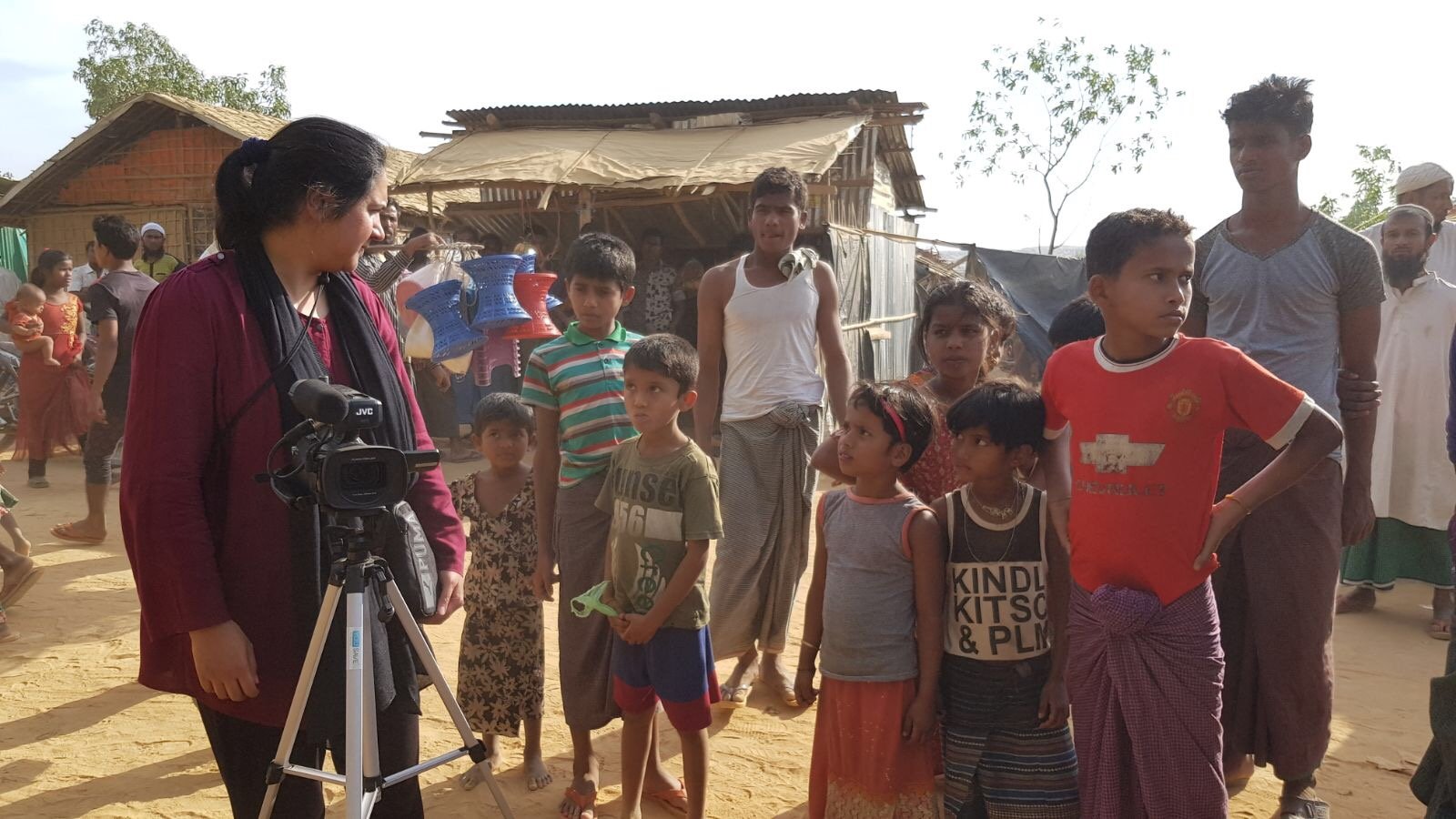
On 19 November 2026 the International Court of Justice did what it had never done in eighty years: it found by 9 votes to 6 that Myanmar committed genocide against the Rohingya, the first time the Court has found that a state committed genocide. The judgment is final and cannot be appealed.
Genocide has long been invoked as the crime “never again” was meant to prevent, yet no state had been formally held to account for committing it. That barrier has now fallen. The question for the international order is whether it was a one-off, applied to a pariah military junta, or a standard that applies to all states.
What the Court established about Myanmar
The Court’s 191-page judgment was largely devoted to a careful examination of the available evidence, including witness testimony and reports by the UN fact-finding mission and the Independent Investigative Mechanism for Myanmar. It found that Myanmar intended to destroy part of the Rohingya group, and that Myanmar failed to investigate and punish the perpetrators. The Court also found that Myanmar breached its obligation under the Court’s 2020 order to prevent genocide and preserve evidence. It ordered a programme of restitution and compensation, with a two-year deadline for Myanmar to report on what it has done.
Three features of this ruling matter most for the wider debate.
First, standing. The Gambia was not a victim state. It brought the case because the Genocide Convention creates obligations owed to all parties, so that a state not directly injured has standing to sue. The Court accepted this in 2022 by fifteen votes to one. Any state may therefore enforce the Convention, and no victim group must rely on a powerful patron.
Second, the evidence. The Court relied on UN-established fact-finding mechanisms, not criminal convictions from a prior tribunal. Legal commentators note that the Court kept its demanding standard, fully convincing evidence, and intent as the “only reasonable inference” from circumstantial evidence, but that in practice the factors it weighed blur the difference between genocide and ethnic cleansing or crimes against humanity. For advocates, this means intent can be proved from patterns of conduct, not only from an explicit order.
Third, the “armed group” defence. Myanmar argued that its forces were responding to attacks by militants. Myanmar has consistently rejected the genocide accusations and said its forces were acting in response to attacks by armed militia. The Court nonetheless found genocide. One analysis reads the judgment as holding that even if part of the targeted group committed terrorist acts, the counterattack can still constitute genocide.
Gaza: the parallel case
South Africa filed its case on 29 December 2023. It rests on the same legal basis as The Gambia’s: in December 2023 South Africa used the same argument to pursue a genocide case against Israel for its conduct in the Gaza war. The Court has already ordered binding emergency measures, though it has stressed these do not prejudge the merits.
Proponents of the case point to the following:
- A UN finding. A UN commission of inquiry found in September 2025 that Israel had committed genocide. Just as in Myanmar, UN investigative machinery has documented the conduct in question. Israel rejected the findings.
- Parallel defences. The argument that operations were a response to attacks by an armed group is, in the words of one legal expert, shared by both cases: the Myanmar proceedings shared similarities with arguments in the Gaza case, particularly over claims that military operations were responses to attacks by armed groups. If the Court has now said that such a response can still amount to genocide, then the defence available to Israel is narrower than assumed.
- Attribution and failure to prevent. The reported finding that a state can be held responsible for acts by others it fails to stop (acts by non-military actors can be held against a state that fails to stop them) is relevant to claims about settler violence and incitement by officials.
- The self-defence argument. South Africa’s position is that, whether or not Israel’s war complies with the law of self-defence, “self-defence is not a defence to genocide.” The Myanmar ruling, on this reading, supports that principle.
The test of consistency
The strongest argument for proponents is not a technical one. It is about equal application. The same Court, the same Convention and the same standard of proof either apply to a state with powerful allies or they do not. Western governments that welcomed accountability for the Rohingya, including Britain, which backed The Gambia’s case, will be asked why a different standard should govern Gaza. Failing to apply it would, as one analyst warned in 2024, risk accusations of double standards and risk undermining the ICJ.
The enforcement gap makes this urgent. If Myanmar does not comply, The Gambia can refer the matter to the Security Council, which has never used its power to enforce an ICJ ruling. Former UN rapporteur Tom Andrews put the point plainly: a ruling does not by itself deliver justice; it requires member states to act.
The Gaza case is moving slowly. Israel filed its counter-memorial in March 2026, and the Court set a deadline of 22 November 2027 for South Africa’s reply. Reporting suggests a final ruling is not expected before 2029. Advocates argue that delay is itself a harm, since the conduct at issue and the humanitarian situation continue while the case proceeds.
Enforcement: the unfortunate gap between judgment and justice
A judgment is only as strong as the means of carrying it out, and here the international system is at its weakest. The ICJ has no police, no bailiffs and no power to compel. The Genocide Convention’s promise rests on what states are willing to do once the Court has spoken.
What the Charter provides
Article 94 of the UN Charter gives the winning party a route: if a state fails to comply with an ICJ judgment, the other party may go to the Security Council. The Council then has two options.
- Recommendations. It can recommend how the judgment should be given effect. These carry political weight but no legal force.
- Binding measures. If it treats non-compliance as a threat to international peace and security under Chapter VII, it can impose sanctions, arms embargoes, asset freezes and travel bans, and in theory authorise force.
The text is permissive, not mandatory. The Council may act “if it deems necessary”, which makes enforcement a political choice rather than a legal obligation.
Why the mechanism has never delivered
The Council has never used this power to enforce an ICJ ruling, and the reasons are structural.
- The veto. Any of the five permanent members can block action. The wider history makes the point: when Nicaragua took its 1986 victory over the United States to the Council, Washington vetoed the resolution. A permanent member can effectively place itself, or its partners, beyond reach.
- Myanmar’s protectors. China and Russia are Myanmar’s principal diplomatic and arms partners and have shielded its military at the Council before. A binding resolution on compliance is therefore unlikely to pass.
- A pattern of defiance. Russia ignored the Court’s 2022 order to halt its invasion of Ukraine, with little consequence. States have learned that non-compliance carries a limited price.
The result is an uncomfortable asymmetry. The Rohingya have won the most significant legal victory in the Court’s history, but the body charged with enforcing it is controlled by states with strategic interests in Myanmar.
Routes that do not depend on the Council
Advocates argue that the judgment’s real power lies in what it enables outside the Council.
- The General Assembly. It can adopt resolutions demanding compliance. They are not binding, but they register the weight of international opinion and can build momentum for further action.
- Coordinated sanctions. States and blocs such as the EU, UK and US need no Council mandate to sanction Myanmar’s military leadership and its commercial enterprises. A judicial finding of genocide strengthens the legal and political basis for doing so, and removes any ambiguity about the legal characterisation of events.
- Individual criminal accountability. The ICJ rules on state responsibility, not individual guilt. But the finding sits alongside efforts to prosecute individuals, including proceedings before the International Criminal Court and cases brought under universal jurisdiction in national courts. A judicial finding of genocide gives prosecutors and investigators a powerful reference point.
- The compliance clock. The Court’s two-year deadline for Myanmar to report on restitution and compensation creates a measurable test. A failure to deliver, or an inadequate report, would strengthen the case for escalation.
- The duty on third states. Under the Genocide Convention, every party has an obligation not to aid or assist a state committing genocide. Advocates argue that the judgment makes continued arms transfers and financial support legally hazardous for third countries.
The implications for Gaza
The same structural problem applies to the case against Israel. Any future adverse ruling would face the same veto dynamics, and the United States has repeatedly used its veto on Council resolutions concerning the conflict. Supporters of South Africa’s case therefore expect that the practical consequences of a judgment would come from the same non-Council routes: national sanctions, arms-export decisions, domestic litigation and diplomatic pressure.
This is why the Myanmar judgment matters beyond its own facts. It will show what a genocide finding actually produces when the Council cannot act, and whether states treat the Court’s rulings as binding obligations or as advice.
It’s a landmark itself that the Rohingya judgment closes a chapter of impunity for one persecuted people and opens a question for every state that is accused of the same crime. Proponents of the Gaza case argue that the legal architecture is now in place and that consistency demands it be applied. Whether the evidence meets the Court’s demanding standard on intent is the question the judges will ultimately answer, and it is one the Myanmar ruling frames but does not resolve. The judgment on Myanmar has given hope for victims of India’s systematic ethnic cleansing of Muslims in Indian-occupied Kashmir as well as for the victims of Bihari genocide in 1971 which remains the most neglected genocide in history.
Aisha Ghazi is a human rights lawyer, author, and documentary filmmaker dedicated to uncovering untold histories. Her work focuses on war and conflict, socio-psychological grounds dictating violence, refugee crisis, geopolitics and history. She is the director of iResist, a human rights platform that advocates human rights through documentary, and a Solicitor of the Supreme Court of England and Wales.