
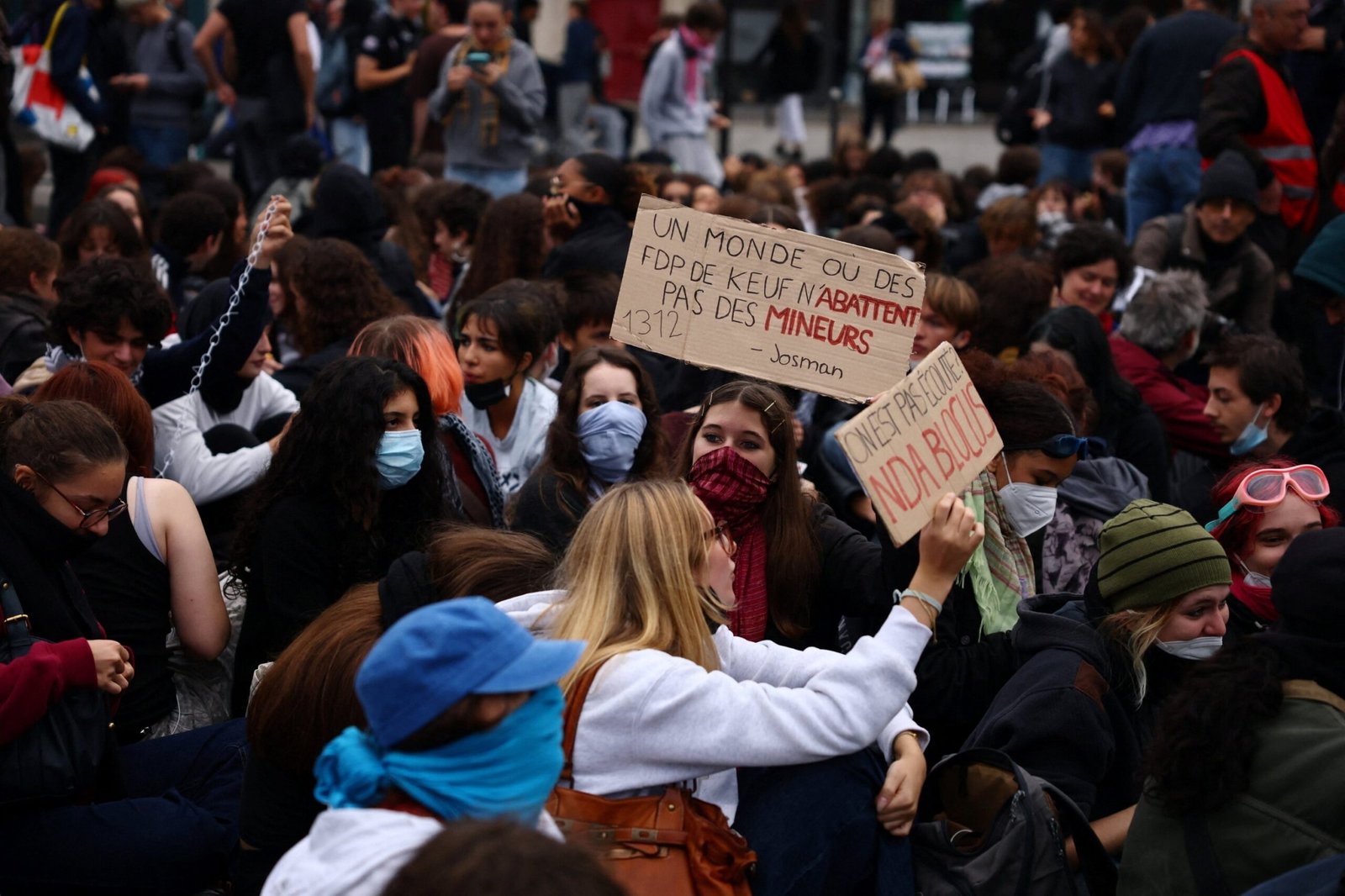
In five weeks, a revolt that began with teenagers dragging rubbish bins across school gates in a Paris suburb has become a continental movement. Pupils are blockading lycées in France, pitching tents in Madrid’s Puerta del Sol and Athens’ Syntagma Square, throwing bricks at a ministry in Tirana and occupying schools in Turin. The causes differ by country, and Alberto Alemanno, a professor of EU law at HEC Paris, cautions that the protests are multifaceted rather than ‘one phenomenon’. Yet the complaint running through many of them is similar: the bargain that promised their parents a decent education, a secure job and a home of their own is no longer being honoured, and students feel their future is being disregarded.
France: the schools that lit the fuse
The French movement began in mid-to-late September around Créteil, where pupils blocked school entrances over missing teachers, overcrowded classrooms and decaying buildings. Students describe buildings falling apart, too few toilets, water leaks and classrooms reaching 35°C to 40°C in the summer heatwaves. Ryad Rani, president of the Union Syndicale Lycéenne, cited classes of 32 to 36 pupils and one student who went seven months without a French teacher in an exam year. Pupils also blame Parcoursup, the university admissions platform, for stress and uncertainty.
Their demands are concrete: an emergency school-renovation programme, large-scale teacher recruitment, lighter timetables, more nurses, psychologists and career advisers, a real voice for students, and an overhaul or repeal of Parcoursup.
The movement has grown well beyond the schoolyard. On 13 October the Interior Ministry counted at least 161,500 marchers nationwide, while youth unions claimed nearly 480,000. On 17 October students joined a cost-of-living day called by Yellow Vest activists and backed by the CGT union: the Interior Ministry put turnout at 550,000 across 110 marches, about 110,000 of them in Paris, and organisers at 800,000. On 1 October the education minister counted 1,207 of France’s roughly 3,700 lycées as disrupted or blockaded, about a third. A Le Figaro poll found 62% of French people believe the students’ movement is justified.
The government has conceded some ground, deploying 3,000 substitute teachers to the 114 worst-hit schools and promising a crisis plan by the end of October. Students call this too little, too slow. The state is squeezed by debt and bond-market pressure, and the draft 2027 budget’s 1.4% rise in education spending to €90.9 billion is, in protesters’ eyes, a long way from repairing years of neglect.
The policing has become a grievance of its own. Justice Ministry figures put the number detained at more than 6,900 by 8 October, 86% of them minors. The weekend of 17-18 October added more than 2,300 arrests, about 70% of them adults. A 15-year-old lost a hand to a police stun grenade in Lens, and the police oversight body was called in. Amnesty International and other rights groups condemned the force used against minors as disproportionate, Human Rights Watch reported serious injuries to children, and the UN human rights office said it was following the incidents with concern.
Trump weighs in, and French authorities ban protests
The French protests have now drawn a reaction from Washington. On Sunday 18 October, President Trump wrote on Truth Social that ‘France is burning’ and urged the country to close its borders. Speaking to reporters in Washington earlier this week, he said the unrest has to do with immigration rather than schools, and that he had told Macron to ‘close up’ his borders. In an earlier Truth Social post, in early October, he blamed the demonstrations on Islam and ‘out of control mass migration’. Trump did not offer evidence, and Vice President JD Vance made similar comments on X on 17 October, ahead of the US midterm elections on 3 November. The students’ own grievances, as described above, concern crumbling schools, teacher shortages and the cost of living.
At home, the government has moved to restrict demonstrations after the violence of the weekend of 17-18 October, which Interior Minister Laurent Nuñez admitted police had failed to anticipate; Macron declined his offer to resign. In a televised address on 18 October, Macron said prefects could ban certain gatherings if necessary. Prime Minister Sébastien Lecornu then asked local authorities to impose partial night curfews, and these have been applied in parts of Paris, Lyon, Nice and Lille. On Thursday 22 October, authorities banned protests planned in Paris, Lyon, Lille and Grenoble. The Paris police prefecture’s ban, which runs until 8 p.m., covers the Élysée Palace, both houses of parliament, the main railway stations and downtown areas hit by looting. Some marches planned for Saturday 24 October, including in Lyon, will also be banned, and Lecornu has promised a ‘massive’ police presence. Thursday’s marches were seen as a prelude to Saturday’s big demonstration, when Yellow Vest activists are expected to join, although France’s main unions had not backed the call as of 20 October. High school and university student groups say they will keep mobilising, even though the autumn school break began this week.
‘A roof over our heads’: Spain, Greece and the housing revolt
If France is about schools, Spain is about shelter. The spark was the eviction of 87-year-old Maricarmen Abascal, who has since died, after a property firm bought her building and raised her rent several times over. Young people camped in Madrid’s Puerta del Sol and other cities, recalling the anti-austerity sit-ins of the financial-crisis years.
Rents in Spain have risen sharply in a decade. The Youth Council of Spain says the average rent of €1,176 a month equals 98.7% of the average net salary of a young person living alone. On 2 October parliament rejected two emergency decrees that would have shielded vulnerable tenants from eviction, tightened short-term lets, offered tax incentives for building and automatically renewed expiring leases. The Catalan party Junts, the opposition People’s Party and Vox voted against, and the protesters vowed to stay. Prime Minister Pedro Sánchez has since called a snap election for 29 November, and a Barcelona housing march on 5 October ended in 13 arrests and 30 injured police officers. In Madrid, several teaching unions began an indefinite strike on 14 October demanding smaller classes, better pay and more public funding.
In Athens, students have camped opposite the parliament since 13 October. Greek press reports small student flats at roughly €500 to €600 a month, far beyond most student budgets. Eurostat data show 25.6% of Greeks aged 15 to 29 live in households spending at least 40% of disposable income on housing, among the highest rates in the EU. Protesters want rent controls, more student housing and bigger subsidies.
The pattern repeats across the continent. About 11,000 people marched against rents in Berlin on 5 September, and two weeks later Die Linke won the city’s regional election on a platform that includes expropriating more than 200,000 flats from large landlords. Tenants have mobilised in Hamburg, Lisbon, Amsterdam and Lyon. In Ireland, where more than 17,000 people live in emergency accommodation, unions and left-wing parties marched in Dublin over rents, wages and utility bills ahead of the budget.
Belgium, Albania and Italy: the cost of learning
In Belgium, students have protested since early October against tuition reforms, overcrowded classes and funding cuts, with fees for some French-speaking students rising from €835 to €1,194. Clashes in Liège on 6 and 7 October led to more than 100 detentions, according to local media. On 9 October a union-led national demonstration against austerity drew about 30,000 people in Brussels, with clashes near the Central Station involving masked groups that organisers said were unconnected to the march.
In Albania, students took to the streets on 13 October over university conditions, higher education costs, scant financial aid and poor job prospects after graduation. The protests became violent, with bricks thrown at the Education Ministry, a fire set inside it, and tear gas and water cannon in response; by 18 October the Health Ministry counted 272 people injured, 169 of them police officers. The protests merged with the ‘Flamingo Revolution’, which began in May over a coastal resort project and widened into anger about corruption and opportunity. Students told local media that university conditions, tuition fees and a lack of support for young people were the main issues. Prime Minister Edi Rama has refused to resign, blames ‘foreign hands’ for the unrest, but says he is ready to listen to students and discuss education costs. Notably, student protests in 2018 forced him to dismiss eight ministers and promise a ‘Pact for the University’, though some demands went unmet.
In Italy, pupils occupied schools in Turin and joined ‘No Meloni Day’ marches in Turin and Rome on 16 October, with more protests over the weekend, demanding more spending on crumbling schools and less on the military.
The numbers behind the anger
The protesters are not inventing a crisis. Official data back much of what they say.
Eurostat puts EU youth unemployment at 15.1% in July 2026, against 6.1% for all ages, and only 65.5% of 20-to-29-year-olds were in work in 2025. Young Europeans now leave their parents’ home at an average age of 26.3, but the figure is 31.5 in Croatia, 30.9 in Greece and 30.2 in Spain and Italy, against 21.4 in Finland. In 2025, 26.9% of 15-to-29-year-olds in the EU lived in overcrowded housing, against 16.8% of the population as a whole, and 9.1% of young people spent more than 40% of disposable income on housing, against 7.7% overall. The rate is 25.6% in Greece, the second highest in the EU. Young people’s unemployment runs at about two and a half times the overall rate. The European Youth Forum, an advocacy body, notes that EU house prices rose 49% and rents 24% between 2010 and 2024, and that social housing makes up only about 8% of the housing stock. Eurofound, the EU agency for living and working conditions, found that renting a standard two-room flat in an urban centre takes more than 80% of a young adult’s median wage in Bulgaria, Ireland, Poland, Portugal and Spain.
Even Brussels agrees. Commission President Ursula von der Leyen has called housing ‘a social crisis’, and Housing Commissioner Dan Jørgensen has called the situation ‘totally unacceptable’. The European Affordable Housing Plan was presented in December 2025.
How legitimate are the demands?
Protesters and their supporters make several arguments.
The demands are modest and specific. Replace absent teachers, repair roofs, cap rents, protect tenants from eviction, fund financial aid. These are not revolutionary programmes but the basic operating conditions of a functioning society.
They rest on rights Europe has already declared. Access to housing is a social right under the European Pillar of Social Rights. If a generation cannot realistically leave home until 30, the right exists on paper only.
Institutions concede the diagnosis. France’s prime minister, Sébastien Lecornu, has launched five workstreams to address the lycées’ difficulties. Rama says he is ready to listen to students’ justified demands. The Commission calls the housing situation a social crisis. Protesters ask why admission of the problem takes weeks of blockades to produce action.
Protest has worked before. Lycée protests in 1990 produced an emergency plan and a bigger education budget; Albania’s 2018 student protests forced a cabinet reshuffle.
Public opinion is on their side. In France, 62% call the movement justified.
Finally, supporters argue, young people have few other levers. Many lycée pupils are too young to vote, while ageing electorates and landlords hold the property and the ballots. Disruption is how the under-represented get heard.
The counter-arguments, and what comes next
A fair account must record the other side. Violence has been real: over the weekend of 17-18 October more than 2,300 people were arrested and almost 1,000 police and gendarmes were injured, according to the government, and the historic town hall in Limoges was set ablaze. Macron has drawn a line between peaceful protesters and violent rioters, saying those who destroy must pay. A Le Figaro poll found 78% of French people think the far-left La France Insoumise is exploiting the movement for political gain, while its leader, Jean-Luc Mélenchon, accuses the government of repressing school students. In Albania, Rama says the unrest is ‘not a student phenomenon’.
On housing, Junts and the People’s Party argue that decrees tighten the market and that building more homes is the answer, and French landlords say rent caps shrink supply. Governments point to fiscal limits. And some data are improving: the EU’s NEET rate, covering young people neither working nor studying, fell to 11.0% in 2025, though it reached 19.2% in Romania and 13.6% in Greece.
The next few days are a test. Lecornu met union leaders on Wednesday without announcing concrete proposals, his promised crisis plan for schools is due by the end of October, French unions are focusing on a national day of action on 5 November, the National Assembly must adopt unchanged, before 24 November, the Senate’s two-year extension of rent controls, passed by 325 votes to 17 on Wednesday, and Spain votes on 29 November. Young Europeans are watching whether words turn into classrooms, tenancies and jobs.
Leo Bruno is an Italian writer and Christian rights campaigner whose work explores faith, culture, politics, and society. His writing spans essays, political commentary, and poetry, bringing together conviction, reflection, and a strong interest in contemporary public affairs. Through his work, Bruno seeks to contribute to debates on human rights, Christian values, freedom, identity, and the challenges facing society today.