A Stone Older Than Any Modern Border
The Koh-i-Noor is usually described as an Indian diamond, and the description misleads. When the stone was mined, probably at Kollur in the Deccan, no state called India existed. There was no Indian passport, flag, constitution or citizenship. There was a vast subcontinent of competing kingdoms, sultanates and empires, with shifting frontiers and overlapping loyalties. “India” in the modern sense is a creation of the twentieth century, born at independence in 1947.
For Pakistan’s advocates, this is the starting point. Any claim that the diamond belongs to the modern Republic of India because it was mined in what is now Indian territory proves too much. By that logic, the stone’s history would belong to whichever modern state happens to occupy a particular patch of ground, even though the people who owned, fought over and wore it belonged to none of these states. The more honest question is not where the stone was dug up but where its history was made, and who is the rightful heir to that history.
The Muslim Chapters
On this view, the diamond’s most documented centuries belong to the Muslim dynasties of the subcontinent. The first reasonably firm reference to a great diamond comes from Babur, the Timurid prince from Central Asia who founded the Mughal Empire in 1526. His memoirs describe it, and it entered the Mughal treasury. For more than two centuries it was part of the imperial regalia of a dynasty whose courts, architecture, language and administration shaped the cultural world of Lahore, Delhi and Agra.
In 1739 Nader Shah of Persia took it from Delhi, and legend holds that he gave it its name. It then passed to Ahmad Shah Durrani and his successors in Kabul and Kandahar. Muslim rulers held it for most of its recorded history: Mughal, Persian and Afghan. Pakistan’s advocates argue that a state founded as a homeland for the subcontinent’s Muslims, and one that sees itself as heir to the Indo-Islamic tradition that flowered in Lahore under the Mughals, has a natural cultural claim to the objects that tradition produced and prized.
The Takht-i-Lahore
The strongest part of the argument concerns the diamond’s last owner before Britain. Maharaja Ranjit Singh took possession of the stone in 1813 from the exiled Afghan ruler Shah Shuja, who had sought refuge in Lahore. From then until 1849, the Koh-i-Noor belonged to the Sikh Empire, whose capital, treasury and throne were at Lahore.
This is the crux. The stone was not taken from Delhi, from Hyderabad or from the Deccan. It was taken from the Lahore treasury, from the throne of Punjab. The Treaty of Lahore of 1849 names the diamond directly and requires its surrender to the Queen of England. The signatory was Duleep Singh, a child of about ten, whose kingdom had just been conquered and whose council was effectively under British control.
Barrister Javed Iqbal Jaffry, the Lahore lawyer who has pursued the case for decades, puts the point in blunt terms. As reported in the press, he holds that the diamond came from territory that became Pakistan in 1947, and says it was not legitimately acquired. The petitioner argues that the stone is part of the heritage of the people of Punjab and of Pakistan. His filing in the Lahore High Court also contends that the diamond was not legitimately acquired and that it came from territory that became Pakistan in 1947.
Why Partition Strengthens the Claim
Punjab was divided in 1947. The Sikh capital, Lahore, and the great majority of the old Sikh Empire’s heartland went to Pakistan, while Amritsar and eastern Punjab went to India. Advocates say the geography is decisive: the place from which the diamond was extracted is in Pakistan, and the treasury that held it is in a Pakistani city. The Lahore Fort, where Ranjit Singh’s court sat and the diamond was kept, stands in Pakistan today.
Many Pakistanis also stress the human dimension. The people of Punjab, most of whom are now Pakistani citizens, are the direct descendants of the subjects of the Sikh Empire. Those whose ancestors paid the taxes that filled the treasury, and who lost their state in 1849, live in Pakistan’s largest province by population. Punjab’s cultural heritage is Pakistan’s heritage.
The Treaty Was Not a Free Agreement
Britain’s defence rests on the Treaty of Lahore. Pakistan’s advocates reply that a treaty extracted from a child king, after a war of conquest, with the victors in control of his capital, does not carry moral or legal weight by modern standards. The diamond was not bought, traded or gifted in any ordinary sense. It was a spoil of war, written into a surrender document.
Jaffry’s petition calls the taking illegal, since the stone was snatched from the young ruler of Punjab at Lahore by the East India Company. The plea in the Lahore High Court stresses the slogan “a wrong is a wrong”, and argues that the passage of time does not turn an act of coercion into a legitimate transfer. This echoes the wider logic of restitution movements around the world. The principle that treasures acquired under colonial duress should be reconsidered has become a mainstream position, applied in recent years to the Benin Bronzes and other objects, and Pakistan’s advocates argue that the Koh-i-Noor belongs in that company.
Pakistan Has Not Dropped Its Claim
The claim has a long record. Pakistani officials asked Britain for it in 1976, a request Britain refused. Jaffry, an Anglo-Pakistani lawyer, says he has pursued the matter since 1958 and has written hundreds of letters to the Queen and to British and Pakistani officials. In 2016 the Lahore High Court accepted his petition for hearing, overruling an objection raised by the court’s registrar office. A Pakistani newspaper noted at the time that Pakistan has never backtracked from its claim, and the Lahore High Court has been hearing the petition regularly.
Pakistan’s advocates also point to the inconsistency of the main rival claimant. In 2016, India’s Solicitor General told the Supreme Court in Delhi that the diamond had been given to Britain, not stolen, by Ranjit Singh’s successors. The government retreated within a day and said it would continue to seek the stone’s return by amicable means. For Pakistan, the episode shows that India’s position is uncertain, and that the Sikh ruler’s state, in whose territory Lahore lies, is the proper reference point.
Why Britain Should Act
Pakistan’s advocates make three practical arguments for return.
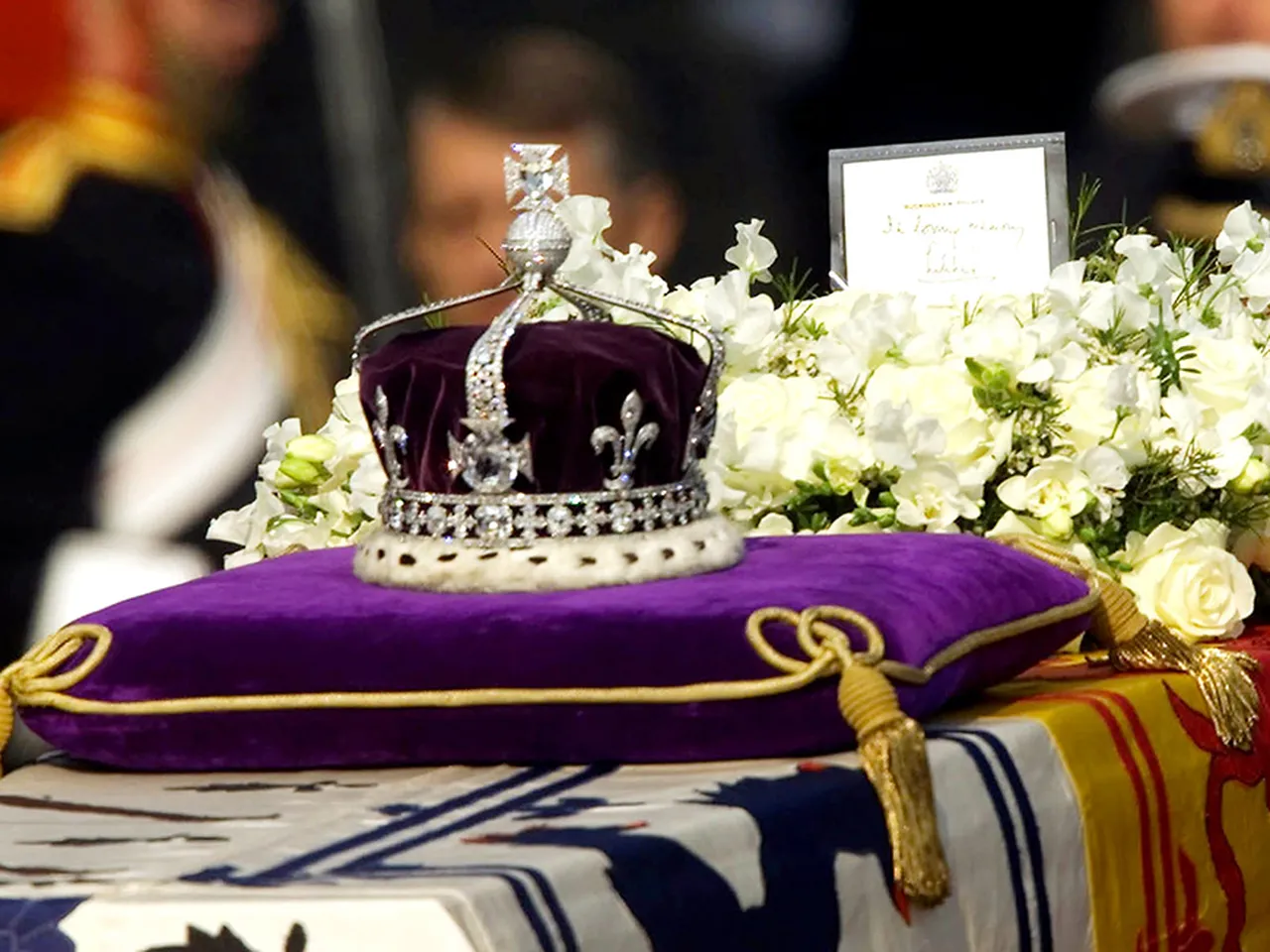
The first is moral. Britain accepted the diamond as the prize of conquest, and its continued display in the Tower of London is a daily reminder of that colonial conquest. Returning it would be a gesture of historical honesty at a time when Britain is re-examining its imperial past.
The second is cultural. In Lahore, the stone could be displayed near the place where it was kept and worn, among the monuments of the Mughal and Sikh eras. Its meaning would be restored to the setting that gave it significance.
The third is legal and diplomatic. Britain has long refused to give the stone back, and in 2010 David Cameron told Indian television the diamond would have to stay where it was. He reportedly warned that returning it would invite other claims and empty the British Museum. Pakistan’s advocates say this is a confession that the objection is not legal at all. It is the fear of a precedent, and fear of a precedent is not a principle.
The Other Side of the Argument
A fair account must set out how strong the opposition is, including from within Pakistan.
First, Pakistan’s own provincial government has undercut the petition. In 2016 a law officer of the Punjab government told the Lahore High Court that the diamond could not be brought back because it was handed to the UK under the 1849 Treaty of Lahore. The court also asked the petitioner to identify the law under which Pakistan could demand the stone’s return, and, as of the reports CENO found, the case has not produced a ruling that compels the government to act.
Second, the “heir to Muslim rule” argument is contested. Although the diamond had been with the Muslim rulers of India for more than two centuries, the last owner before Britain was a Sikh maharaja, not a Muslim ruler, and Sikh heritage is claimed by Sikhs on both sides of the border. India argues that the stone was mined in its territory, that it was taken from the subcontinent as part of colonial plunder, and that India is the sovereign successor to British India. India’s claim totally ignores the fact that India is not the only sovereign successor to Britain and the argument of sovereign successor puts more weight on Pakistan’s claim as Pakistan is the sovereign heir of Muslim rule in the Indian subcontinent.
Third, Britain maintains that the stone was legally acquired under the treaty and belongs to the Crown, and no international court has held otherwise. International law on restitution generally does not apply retroactively to acquisitions made in the nineteenth century.
Finally, the claims of several states over one object may be more of a reason for Britain to hold on than to give way. Even many Pakistani commentators accept that the chances of the stone returning to the subcontinent are slim, until an organised global campaign is run for the return of the jewels and antiquities brought to London during the colonial era.