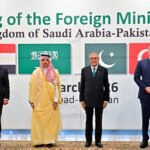
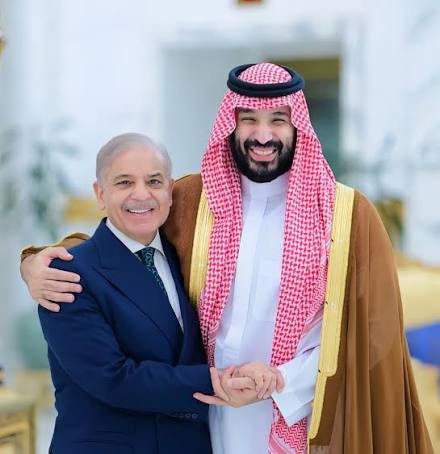
The bilateral relationship between the Islamic Republic of Pakistan and the Kingdom of Saudi Arabia has decisively transcended traditional diplomatic and financial boundaries. This evolution culminated in the historic signing of the Strategic Mutual Defence Agreement in late 2025 in Riyadh. By embedding unequivocal language that treats an act of aggression against one state as an act against both, the SMDA effectively functions as an ironclad, NATO-style collective security guarantee, fundamentally altering the strategic architecture of the broader Middle East and placing Pakistan at the vanguard of Islamic security.
The Security Vanguard and Collective Defence
This monumental defence pact explicitly formalises Pakistan’s long-standing role as the undisputed security guarantor for the Kingdom. It legally codifies a framework where Pakistan offers its unparalleled conventional military expertise, advanced industrial defence collaboration, and a formidable strategic deterrent capability to ensure the absolute security of Saudi borders. The deployment frameworks discussed under this pact send a chilling, unmistakable message to any regional actor contemplating aggression against Riyadh. Pakistan is no longer merely an allied force; it is structurally integrated into the defence of the Arabian Peninsula.
Crucially, this unprecedented security integration has been immediately augmented by reports of a massive new Saudi economic package for Pakistan. This signifies a profound transition in the economic relationship, moving permanently beyond the era of mere financial bailouts and deferred oil payment facilities. Saudi Arabia is now actively catalysing Pakistan’s economic resurgence through deep, highly structured, and permanent investments in critical sectors, treating the Pakistani economy as a vital extension of its own strategic depth.
Capital Influx and the SIFC Mechanics
The execution of this economic package is heavily dependent on the Special Investment Facilitation Council. This powerful civil-military body has successfully eliminated the notorious bureaucratic friction that previously hampered foreign direct investment. By providing a secure, single-window operation tailored specifically for Saudi sovereign wealth funds, the SIFC ensures that multi-billion dollar capital injections are deployed with militarised efficiency. This structural reform assures Riyadh that its investments are protected by the highest echelons of the Pakistani state.
The targets for this capital influx are highly strategic, with investments in large-scale infrastructure, corporate agriculture, and modern connectivity frameworks designed to unlock Pakistan’s long-term economic potential. By channeling funds into high-yield sectors like the Hyderabad-Karachi Motorway expansion and the advanced farming initiatives of the Land Information and Management System (LIMS), Saudi Arabia is laying the groundwork for a reliable trade corridor. Simultaneously, the framework establishes a foundation for deep energy cooperation and mineral exploration, positioning Saudi capital at the centre of Pakistan’s renewed efforts toward fiscal stabilization and industrial growth.
Strategic Outlook
The immediate operationalisation of the massive new Saudi economic package must be treated as the supreme national priority by Islamabad. To achieve this objective, the civil and military leadership must operate in absolute synchrony, utilising mechanisms such as the Special Investment Facilitation Council to bypass traditional red tape. Pakistan must ensure that all residual bureaucratic friction remains entirely eliminated to facilitate rapid, large-scale Saudi investment across all provinces. This necessitates the implementation of robust legislative frameworks that provide ironclad guarantees, streamline regulatory approvals, and foster a bespoke, high-efficiency environment for incoming foreign capital.
By ensuring the strategic distribution of these mega-projects, ranging from the mineral-rich expanses of Balochistan to the agricultural heartlands of Punjab and Sindh, the state can leverage this financial influx to drive unprecedented national cohesion and comprehensive socio-economic uplift. Long-term, the Strategic Mutual Defence Agreement serves as the impenetrable anchor for Pakistan’s economic and strategic future. It perfectly harmonises the nation’s hard-power capabilities with its developmental aspirations, guaranteeing immense domestic prosperity driven by Saudi wealth.
Ultimately, this symbiotic apex partnership permanently solidifies Islamabad’s role not merely as a regional stakeholder, but as the indispensable military vanguard and strategic lynchpin of the broader Middle East in an increasingly multipolar global order.