In the fractured geopolitical landscape of 2026, a single question has moved from the margins of strategic discourse to its very centre: who speaks for the Muslim world’s sovereign interests when they are threatened by the expansionist ambitions of regional powers? The answer, increasingly, is Pakistan. From the negotiating rooms of Islamabad to the corridors of the United Nations Security Council, Pakistan has emerged not merely as a diplomatic actor but as the indispensable guarantor of strategic autonomy for Muslim-majority states navigating an era of intensifying great-power rivalry, Indian nationalist expansionism, and the weaponisation of religion, water, and territory as instruments of coercion.
This is not coincidental. It is the product of a unique confluence of geography, military capability, nuclear deterrence, and a foreign policy doctrine that has, after decades of turbulence, found its strategic footing. Pakistan’s emergence as a regional anchor reflects a structural reality that its rivals have long sought to obscure: that a stable, sovereign, and diplomatically active Pakistan is not a problem for the region, but its most reliable solution.
The Nuclear Shield and the Balance of Power
To understand Pakistan’s role as a guardian of Muslim sovereignty in South Asia, one must begin with the foundational reality of nuclear deterrence. Pakistan is the only nuclear-armed state in the Muslim world. This singular fact has, since 1998, altered the strategic calculus of the entire region in ways that are still not fully appreciated in Western policy circles.
India’s conventional military superiority, its three-times-larger defence budget, and its longstanding aspiration to assert regional hegemony across South Asia have all been structurally constrained by Pakistan’s nuclear posture. The May 2025 Indo-Pakistan War, in which seven Indian aircraft were downed by Pakistan’s Air Force with no losses on the Pakistani side, demonstrated that this deterrence extends beyond the nuclear threshold into the conventional domain. A Pakistan that can hold its self firmly against a power three times its size, whilst simultaneously holding nuclear equalisation in reserve, is a Pakistan that cannot be coerced, occupied, or strategically marginalised.
This matters far beyond Pakistan’s borders. The Muslim-majority regions of Jammu and Kashmir, subjected to Indian military occupation and the revocation of their autonomous status in 2019, have no credible external advocate with the military weight to enforce their rights other than Pakistan. The Rohingya of Myanmar, the Muslims of Gujarat, and the communities facing the systematic dismantling of their citizenship rights under India’s Citizenship Amendment Act all exist in a regional environment where Pakistani deterrence represents the single most significant structural check on majoritarian expansionism.
Islamabad as the Centre of Muslim Diplomatic Gravity
Pakistan’s diplomatic resurgence in 2026 has demonstrated that military deterrence and diplomatic influence are not mutually exclusive, they are mutually reinforcing. By brokering the Islamabad Memorandum of Understanding between the United States and Iran in June 2026, Pakistan achieved something no other Muslim-majority state could have accomplished: it brought the world’s most powerful military into a negotiated framework, on terms that preserved Iranian sovereignty and prevented the total destruction of a neighbouring state.
The significance of this achievement cannot be overstated. Iran faced an existential military threat from a joint US-Israeli coalition. Its Supreme Leader had been killed. Its nuclear infrastructure had been degraded. Its economy was under siege. At the moment of maximum vulnerability, it was Pakistan that stepped into the breach and created the diplomatic space for a ceasefire. The Islamabad MoU did not merely pause a war; it demonstrated that Islamabad could operate as the diplomatic capital of the Muslim world’s strategic interests when those interests were under direct assault.
This is the model of guardianship that Pakistan now embodies: not ideological leadership, but practical, results-oriented diplomatic intervention at the moment it is most needed. The Makkah Joint Defence Agreement of August 2026, binding Pakistan, Saudi Arabia and Turkey into a collective security framework, has formalised this role institutionally. For the first time in the post-colonial era, the three most capable Muslim-majority states in terms of military power, financial depth, and diplomatic reach are operating under a unified security architecture. Pakistan provides the nuclear deterrent and the conventional military credibility; Turkey provides the defence-industrial base and the NATO bridge; Saudi Arabia provides the financial depth and the Islamic world’s political centre of gravity.
Countering the Expansionist Threat
The expansionist ambitions that Pakistan now structurally constrains are not abstract. They are documented, active, and accelerating. India under the BJP government of Narendra Modi has pursued a systematic programme of Hindu nationalist consolidation that has eroded the constitutional rights of 200 million Muslim citizens and deployed state machinery, including the judicial system, the police, and planning authorities, to marginalise, intimidate, and economically dispossess Muslim communities across the country.
Beyond its borders, New Delhi has pursued a doctrine of strategic encirclement, investing heavily in relationships with Bangladesh, Nepal, Sri Lanka, and the Gulf states specifically to reduce Pakistan’s regional influence and diplomatic space. The weaponisation of the Indus Waters Treaty, with India placing the 1960 agreement in “abeyance” following the Pahalgam attack and threatening to cut off “every drop” of water reaching Pakistan, represents the most explicit articulation of this doctrine: the use of existential resource leverage against a downstream Muslim-majority neighbour as an instrument of strategic coercion.
Pakistan’s response has been measured, multilateral, and effective. The Permanent Court of Arbitration in The Hague has upheld Pakistan’s legal position. The United Nations Security Council has been briefed on the humanitarian implications, and the Makkah Joint Defence Agreement has introduced a strategic cost to any further Indian escalation that New Delhi’s planners are only beginning to calculate. The prospect of Saudi capital, Turkish military technology, and Pakistani nuclear deterrence operating in concert fundamentally alters the risk calculus for any regional power contemplating further expansionist action.
The Kashmir Question: From Bilateral to International
Perhaps the most consequential shift enabled by Pakistan’s diplomatic resurgence is the internationalisation of the Kashmir dispute. For decades, India successfully maintained the diplomatic fiction that Kashmir was a strictly bilateral matter, using its growing economic weight to deter third-party engagement and suppress international scrutiny of the human rights situation in the territory.
That fiction is no longer sustainable. Pakistan’s elevated standing in Washington, following its role in the US-Iran negotiations, has created a diplomatic opening to link Middle Eastern and South Asian stability in ways that directly challenge India’s preferred framing. With China entrenched along the Line of Actual Control, the United States increasingly reliant on Pakistani mediation, and the Makkah alliance providing collective security depth, India’s claim that Kashmir is a closed bilateral issue has lost its institutional credibility.
The 8 million people of Indian-occupied Jammu and Kashmir, who have lived under one of the world’s most heavily militarised occupations, now have a more credible external advocate than at any point since the 1965 war. This is not a minor diplomatic adjustment. It is a structural shift in the international politics of the dispute, enabled entirely by Pakistan’s strategic repositioning.
Strategic Outlook
Pakistan’s emergence as the guardian of Muslim sovereign interests in South Asia and the wider region is neither complete nor without risk. The country faces severe domestic economic pressures and the constant challenge of managing its relationships with Washington and Beijing simultaneously without compromising either.
But the structural foundations of Pakistan’s new regional role are more durable than its critics acknowledge. Nuclear deterrence does not expire with electoral cycles. The Makkah alliance does not dissolve with changes in government. The PCA ruling on the Indus Waters Treaty does not reverse with diplomatic pressure. And the credibility earned by facilitating the Islamabad MoU cannot be erased by a single negotiating setback.
What Pakistan has established in 2025 and 2026 is not merely a run of diplomatic success. It is a new regional architecture in which Muslim sovereignty, strategic autonomy, and collective security are no longer aspirational concepts but operational realities, anchored by the only nuclear power the Muslim world possesses. For the first time in the post-colonial era, the expansionist ambitions of regional powers face a structured, multilateral, and credible counterweight. That counterweight is Pakistan.
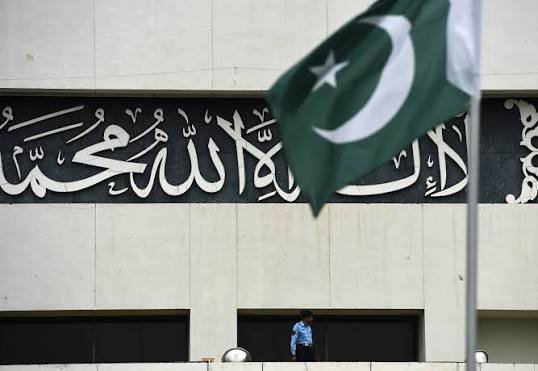
[Image Credit: AFP]